Yong Jae Lee
Published: August 20, 2026 · Reviewed: September 2026 · 15 min read
Researched and written by Yong Jae Lee · Content follows NZ Ministry of Health guidelines
Milk allergy and lactose intolerance are not the same thing. What changes in the box, where milk hides on an NZ label, and our 43 dairy-free menus.
A dairy-free lunchbox usually starts with one of two conversations: a doctor's, or a school office's. They lead to very different boxes, and the first thing worth getting straight is which one you are in — because "no dairy" covers two conditions that are not the same, do not carry the same risk, and do not ask the same things of the school.
The practical news first. The planner's Dairy Allergy filter leaves 43 of our 94 menus standing, and they are not substitute versions of dairy lunches. They are lunches that never contained dairy in the first place, which is a different and much easier thing to pack.
Milk Allergy and Lactose Intolerance Are Not the Same Problem
Healthify He Puna Waiora — the New Zealand health information service run by the Health Navigator Charitable Trust — puts it in one line: "Lactose intolerance is often confused with milk allergy. These are different conditions".
Cow's milk allergy is an immune reaction to the protein in cow's milk. Healthify describes two patterns: a fast one, where symptoms appear within minutes and up to two hours, and a delayed one, where they appear after two hours and up to a few days later. The delayed kind is the one that hides, because by the time a child is unwell the lunchbox is long since washed up.
Lactose intolerance is about the sugar, not the protein. Healthify's practical distinction is the sentence to hang your label-reading on: people with lactose intolerance can usually manage small amounts of milk products, whereas in milk allergy small amounts usually cause symptoms.
That difference decides how strict you have to be, and it has an immediate consequence at the supermarket:
Lactose-free is not milk-free. Lactose-free milk has had the sugar dealt with and still contains the milk protein. It is the right answer for intolerance and the wrong one for allergy. "Non-dairy" is a marketing phrase rather than a regulated one; the word that carries legal weight on a New Zealand label is milk, and that is the section further down.
This article is informational and follows publicly available New Zealand health and food-labelling guidance. It is not medical advice. If dairy has come out of your child's diet on medical advice — or you suspect it should — that belongs with your GP, an allergist, or an NZ Registered Dietitian, not with a lunchbox website.
What to Tell the School, and How Much Detail
Schools act on what is written on the dietary form, and "dairy-free" on its own does not tell them whether a shared birthday cupcake is a problem or an inconvenience. This is what each situation actually asks for:
| What your child has | What the school needs from you | What it means at lunchtime |
|---|---|---|
| Milk allergy, fast reaction | An allergy action plan on file, where any prescribed adrenaline auto-injector is kept, and staff who have read both | No milk protein at all. Baking days, shared kai and class parties need an alternative you supplied |
| Milk allergy, delayed reaction | The same avoidance, plus a note that symptoms can appear hours later — so a reaction may not look like one | Same avoidance. The risk is that nobody connects the cause to the lunch |
| Lactose intolerance | A line on the dietary form. It is not an emergency and does not need an action plan | Small amounts are usually fine. The stake is comfort, not safety |
| Dairy-free by choice (vegan, religious, family) | The dietary form again — this is what school-provided lunches are matched against | Treated as a diet requirement rather than a medical one |
Our school lunchbox policy guide covers the other restrictions that usually sit alongside this one, and the allergy management guide walks the same ground for every major allergen.
A note worth sending in week one. Adapt the bracketed parts and delete what does not apply:
Kia ora, [Child's name] in Room [x] does not have any dairy. It is [a diagnosed cow's milk allergy / lactose intolerance], which means [even traces are a problem / small amounts are usually fine]. Could you let me know: 1. Whether the class has regular food activities — baking, shared kai, class parties — so I can send an alternative on those days; 2. [If allergy] Where our allergy action plan is kept, and which staff have seen it; 3. Whether the school takes part in Ka Ora, Ka Ako, and if so how dietary requirements are recorded for it. Ngā mihi
Point three matters more than it looks, and it is the last section of this article.
The 43 Menus That Need No Dairy at All
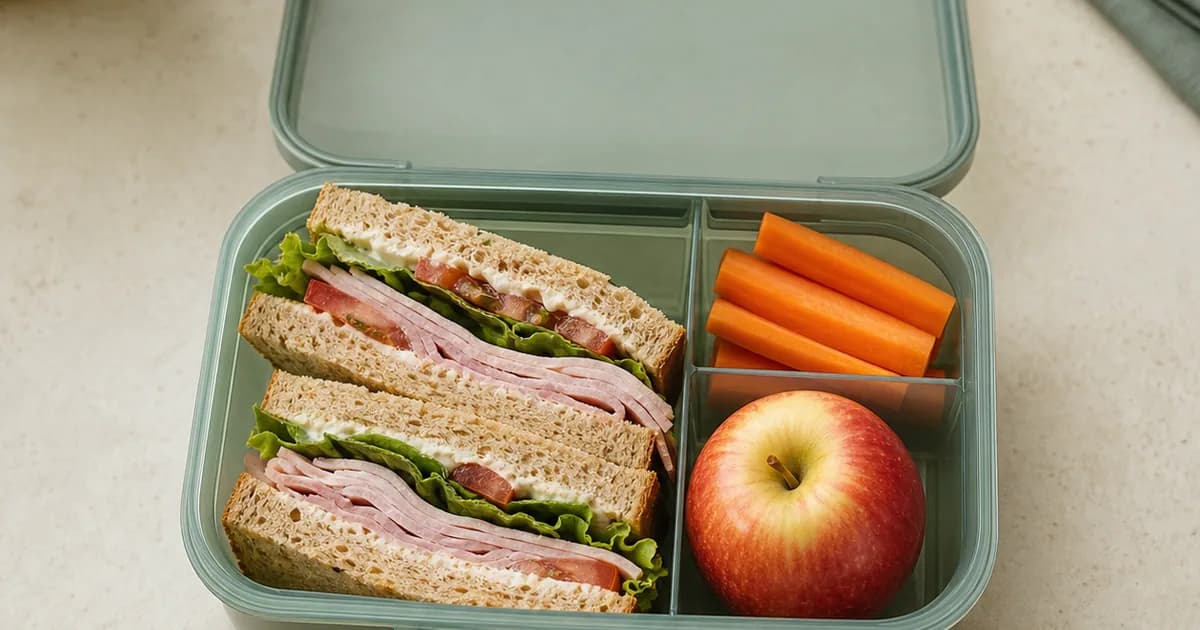
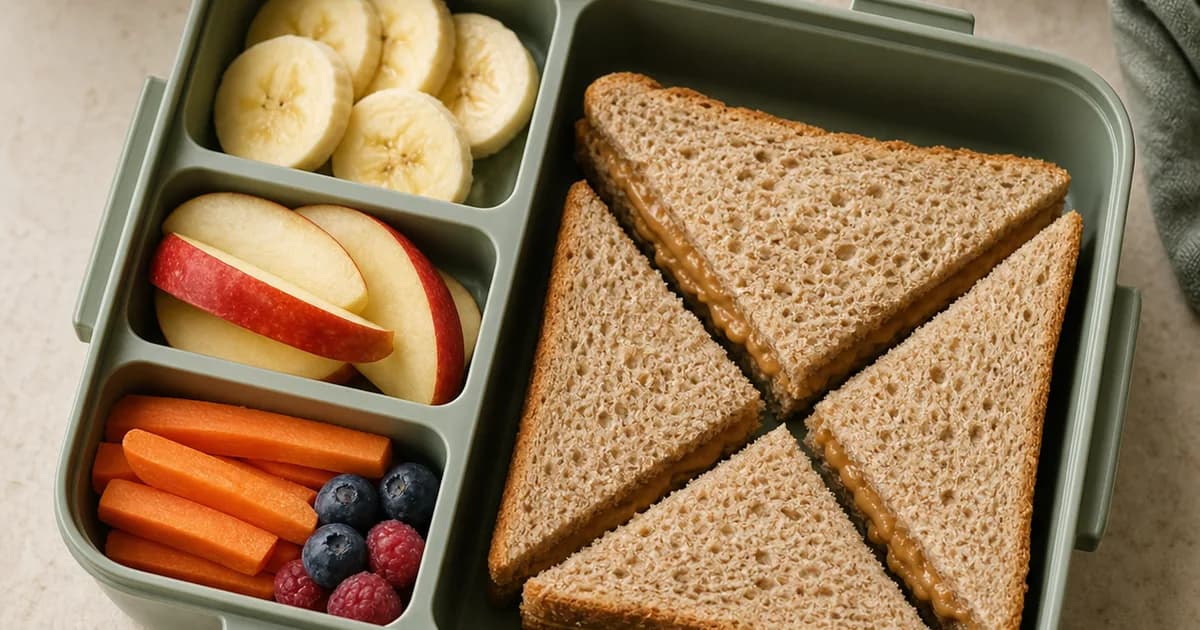
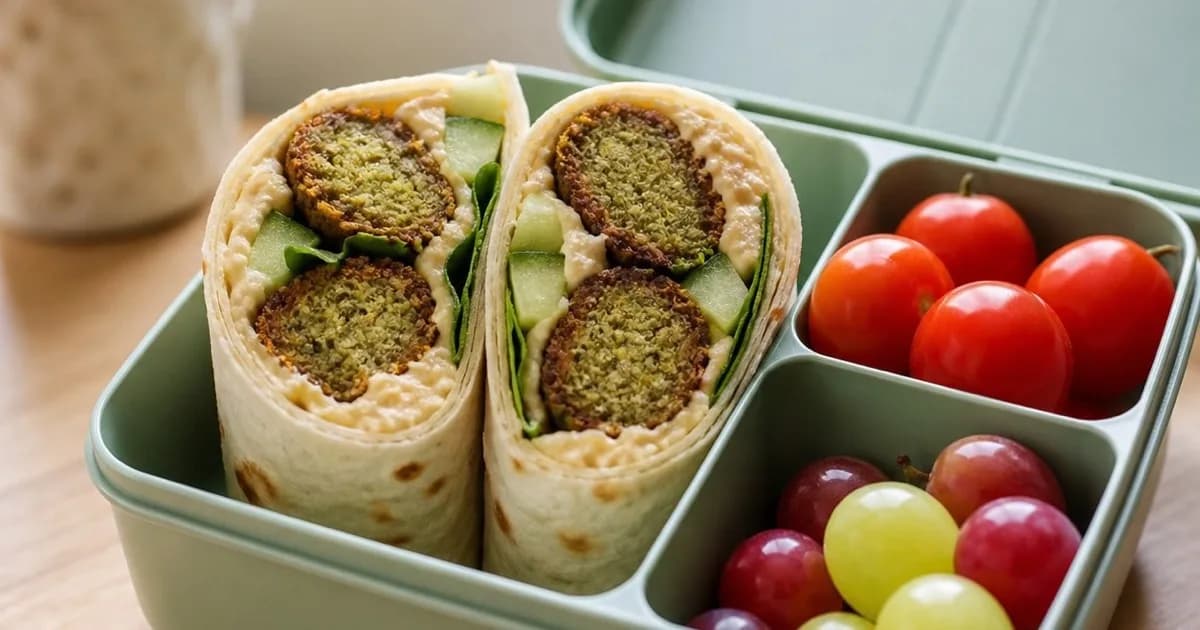
Ticking Dairy Allergy in the planner narrows the library to 43 of 94 menus. The first few, straight from the data: Roast Beef Roll, Veggie Wrap, BLT Sandwich, Peanut Butter Sandwich, Fried Rice, Teriyaki Chicken & Rice, Mini Meatballs, Spaghetti Bolognese.
That list is generated rather than chosen, so it is not curated around any other restriction — dairy-free and nut-free are separate filters, and the planner lets you stack them.
Not one of the 43 lists milk, cheese, butter, cream or yoghurt among its ingredients. That is the claim worth checking, because a menu that merely omits the cheese from a cheese sandwich is not a dairy-free lunch — it is a worse sandwich.
Here is how the 43 overlap with the other filters, which is what decides whether you can stack restrictions without emptying the week:
| Of the 43 dairy-free menus | How many |
|---|---|
| Also nut-free | 40 |
| Also egg-free | 32 |
| Also vegetarian | 24 |
| Also gluten-free | 17 |
| Also thermos-friendly | 12 |
The ones that need no cooking at all — the assembly-only end of the list, for the mornings that have gone wrong before they started:
- Roast Beef Roll
- Veggie Wrap
- Peanut Butter Sandwich
- Rice Paper Rolls
- Chickpea Salad Sandwich
- Veggie Sticks & Hummus Box
- Falafel Wrap
- Fruit Salad
- Falafel Pita Pocket
- Corn Tortilla Veggie Wrap
There is a pattern in the full list, and it is worth naming because it changes what you shop for. What survives the filter is mostly rice, wraps, legumes and cold meat: the dishes whose cuisines never leaned on dairy to begin with. The lunches that fail the filter are the ones built around a cheese slice or a yoghurt. So the shortest route to a dairy-free week is not to buy dairy-free versions of what you already packed — it is to cook from the part of the library that was never going to have dairy in it.
What Cheese Was Actually Doing
Cheese survives in lunchboxes because it does three jobs at once, and the mistake is replacing it with one product instead of replacing the three jobs.
| The job cheese was doing | What can do it without dairy |
|---|---|
| Protein | Tinned tuna or salmon, cold roast meat, chickpeas and hummus, falafel, tofu, edamame, egg (if egg is still on the menu) |
| Fat, and staying full until the bell | Avocado, tahini, olive oil in a dressing, seeds where the school's policy allows them |
| Making bread edible | Hummus, avocado, a dairy-free spread, chutney, or simply a wetter filling |
Commercial dairy-free cheese is aimed almost entirely at the third job. It melts and it binds; it is not usually a protein. If it goes in as a like-for-like swap, the protein quietly leaves the box, and that is the same trap our nut-free article describes when peanut butter is replaced with jam — cheap, easy, and no longer doing the work. Our egg-free article covers the same protein gap from the other side, which is worth reading if both restrictions apply at once.
For hot lunches, 12 of the dairy-free menus are built to travel in a flask — our thermos article covers how that morning works.
Calcium Is the Nutrient to Actually Watch
Our complete nutrition guide names milk, cheese and yoghurt as the lunchbox calcium sources. Take dairy out and that entire column goes with it, which is the one genuine nutritional consequence of this restriction rather than an inconvenience.
Sources that fit in a lunchbox and contain no dairy:
- Calcium-fortified plant milk — but fortification is not automatic. Some are fortified and some are not, and the only way to tell is the nutrition information panel on the carton in your hand.
- Calcium-set tofu — the setting agent is what makes the difference, and it is listed in the ingredients.
- Tinned salmon or sardines with the bones left in.
- Tahini, which doubles as the spread that replaces cheese's binding job.
- Leafy greens and broccoli, in a wrap or a salad box.
Our vegetarian and vegan guide lists the same set for the same reason, because a vegan lunchbox faces this problem every day.
This article deliberately gives you no milligram target. Naming the nutrient is something we can stand behind; naming a daily figure would mean pointing at an authority we have not opened and read. If your child came off dairy on medical advice, the intake question is one for a dietitian, who can look at the whole day rather than one box.
Where Milk Hides on a New Zealand Label
Milk is one of the allergens that must be declared under the Australia New Zealand Food Standards Code. Food Standards Australia New Zealand (FSANZ) lists milk among the allergens that must be declared on the food label whenever they are present as ingredients, however small the amount.
Since 25 February 2024, that declaration has had to be in plain English. FSANZ's allergen labelling rules for consumers require the allergen to appear in the ingredient list under its exact name and in bolded text, together with "a bolded, separate allergen summary statement starting with the word 'contains'". For dairy the required word is milk, so casein, whey and milk solids can no longer carry the declaration on their own.
Two things follow, and they pull in opposite directions:
1. A Contains statement is now a genuinely useful shortcut. If milk is an ingredient, it has to be in there, in that word. 2. "May contain milk" is not the same kind of statement. FSANZ is explicit that precautionary statements are voluntary and that the Food Standards Code does not regulate them. So a may-contain is neither proof of risk nor proof of safety, and how much of it your child can live with is a question for your allergist rather than for a label. Our nut-free article makes the same point about nuts. And when we read the label on every product we track, 15 of them declared an allergen the product name never suggests — roti with milk, a rice cereal with gluten.
The categories worth slowing down on in a New Zealand trolley, because milk turns up in them for reasons that have nothing to do with the product being dairy:
- Table spreads and margarine — milk solids are common, and this is the one that catches people who have carefully bought dairy-free bread.
- Sandwich bread, buns and wraps — milk powder is a routine softener.
- Crackers and crispbread.
- Flavoured chips, instant noodles and seasoning sachets, where the flavour base does it.
- Processed and deli meats, where milk protein can act as a binder.
- Chocolate, including dark, and anything labelled "compound".
- Stock powder, gravy and instant soup.
- Crumb and batter on frozen chicken, fish or vegetable products.
None of that is a claim about any particular product. Formulations change, and the point of the list is which shelf deserves a second look rather than which packet to trust.
Does Dairy-Free Cost More?
Costed against the supermarket prices behind our NZ Lunchbox Price Index, the median dairy-free main works out at $2.18 against $2.49 for the mains that contain it — 31c apart. At the median, this restriction is close to free.
The median hides the swap that stings, though. On tracked prices cheese runs 55c a serve — cheaper than black beans (62c), an egg (86c), sliced ham (66c) and chicken breast ($2.00), though tinned chickpeas (30c) undercut it, so losing it is a real cost in the boxes that were built on it — our egg-free article makes exactly that point from the other direction. What keeps the two medians close is that most dairy-free menus never needed cheese: they are built on rice, legumes or meat.
Which gives the same answer as the menu list did. The expensive way to go dairy-free is to buy the substitute version of everything you already ate. The cheap way is to cook the things that were never dairy in the first place.
The Snack Is Where It Leaked
The main was never the hard part. 43 of our 94 menus are dairy-free and the planner filtered those correctly from the start. The snack beside it was a different story: until 10 September 2026 the planner picked snacks without checking your allergy settings at all, so a dairy-free week could arrive with cottage cheese sitting next to the soup. An outside review found it, we fixed it, and the fix is worth describing because of what it turned up.
Turn the dairy filter on now and 26 of 33 snacks survive. These drop out: Cheese Cubes, Yoghurt Pot, Cheese Stick, Cottage Cheese, Probiotic Drink, Rice Wheels and Veggie Straws.
Most of that list is obvious. One is not. Rice Wheels is a chicken-flavoured rice snack, and its packet declares milk — nothing in the name says so. That is why the filter now reads the allergen label on the product we track rather than the snack's name. A list written from names would have passed it, and ours did.
19 of the products we track declare milk on the label. How often the name and the label disagree turned out to be its own subject: what the allergen labels actually say.
If Your School Is in Ka Ora, Ka Ako
Some New Zealand schools already provide lunch through Ka Ora, Ka Ako, the Ministry of Education's Healthy School Lunches Programme. Where it operates, suppliers must provide "safe options for all children including those with allergens, intolerances", along with ethical and religious diet requirements.
The same page puts the parent's half of it in one sentence: "If your child has an allergy or special diet, notify your school." At a participating school the dairy-free lunch is the programme's job — but only once someone has been told, and the telling is not automatic. That is why it is question three in the note above.
What This Article Does Not Have
Saying this plainly is more useful than filling the gaps with numbers we would have to invent:
- No calcium figures. No milligram target appears above, because we have not opened and verified an official New Zealand intake figure against its primary source. A nutrient name we can stand behind; a number needs a source we have actually read.
- No brand list. We have not label-checked dairy-free products in a New Zealand store, so no product is named safe here. A list like that is out of date the week after it is written, which is why the labelling section above teaches the label instead.
- No prices for dairy-free substitute products. Our price index tracks staples, not specialty items. The cost comparison above is between menus, not between a block of cheese and the thing that replaces it.
- Whether a dairy-free box comes home empty. That is a taste question rather than a safety one, and it is the one that actually decides whether any of this worked.
If any of those get measured, they get added here with the date they were taken.
Plan a Dairy-Free Week
The Kiwi Lunchbox Planner has the Dairy Allergy filter built in. Tick it — on its own, or stacked with nut-free, egg-free or gluten-free — and the week's mains are drawn only from the 43 menus above, costed on this week's New Zealand supermarket prices. Snacks go through the same filter — checked against the milk declared on the label of each product we track, as the section above describes — but not against "may contain" warnings, so read the packets yourself if the allergy is a strict one.
References
- Healthify He Puna Waiora (Health Navigator Charitable Trust): Lactose intolerance | Mate miraka — healthify.nz/…/lactose-intolerance — for the distinction from milk allergy and the small-amounts difference.
- Healthify He Puna Waiora: Cows' milk allergy — healthify.nz/…/cows-milk-allergy — for the immune reaction to milk protein and the fast and delayed reaction patterns.
- Food Standards Australia New Zealand: Food allergies — foodstandards.gov.au/consumer/foodallergies — for milk being among the allergens that must be declared however small the amount present.
- Food Standards Australia New Zealand: Allergen labelling for consumers — foodstandards.gov.au/consumer/labelling/allergen-labelling — for the 25 February 2024 plain English requirements, the bolded "contains" statement, and the unregulated status of "may contain".
- Ministry of Education: Healthy School Lunches Programme (Ka Ora, Ka Ako) — education.govt.nz — for the dietary-requirements obligation and the instruction to notify your school.
- Allergy New Zealand — the national membership organisation for people living with allergies, worth knowing about if a diagnosis is new.
All five source pages above were opened and read on 20 August 2026. No figure in this article comes from a page we did not open.
References & Sources
About this article
This article was researched and written by Yong Jae Lee, a parent based in Auckland who runs Kiwi Lunchbox as a solo project. I am not a dietitian or a health professional, so nothing here is medical advice. Where an article rests on desk research rather than something I have cooked or used myself, it says so, and nutrition writing is aligned with New Zealand's healthy eating guidelines. If you spot an error or have a suggestion, please contact us.