Yong Jae Lee
Published: January 5, 2026 · Reviewed: September 2026 · 15 min read
Researched and written by Yong Jae Lee · Content follows NZ Ministry of Health guidelines
How to pack a balanced NZ school lunch — portion sizes, Ministry of Health guidelines, and what each food group costs per lunch from our price tracking.
Why School Lunch Nutrition Matters
A New Zealand lunchbox covers two eating occasions, not one — morning tea and lunch. The best local measurement of what that adds up to comes from the 2002 Child Nutrition Survey: food eaten between 9am and 2pm supplied 31.5% of daily energy, of which the 12–2pm lunch window alone accounted for 20.4% (Regan et al. 2008, reproduced as Table 1 in the Ministry of Education's Ka Ora, Ka Ako nutrition evaluation). For comparison, Ka Ora, Ka Ako sets its own target at 33% of recommended daily intake from a single lunch, and that same evaluation calls it a high standard to hit.
So the box is carrying about a third of the day — but the sandwich alone is carrying about a fifth. That distinction matters when you are deciding whether the morning-tea slot is worth thinking about, and it is why this guide treats it as part of the meal rather than an afterthought.
Yet despite its importance, lunchbox nutrition is often an afterthought. The morning rush takes over, and convenience wins. This guide is designed to give you a clear, practical framework for packing lunches that genuinely support your child's health — without requiring a nutrition degree or a two-hour morning prep session.
Note: The nutrient reference values and national survey intakes in this guide are taken from the Ministry of Health's Food and Nutrition Guidelines for Healthy Children and Young People (2–18 years): A background paper, where the two are published together, and each of those is sourced to a table in it. The portion guide and the sugar figures further down are rough, typical values rather than sourced ones — they are labelled where they appear.
There's a second thing worth saying up front, because it's the objection I hear most: balanced sounds expensive. It isn't, and I can show the arithmetic. Every cost in this guide is a regular Woolworths shelf price, re-read from their online shop each week — the same set of readings the planner uses to price your lunches. (The NZ Lunchbox Price Index is a separate and wider job: the same 20 staples priced at Woolworths, Pak'nSave and New World so you can see which chain is cheaper. It is not where the figures below come from.) So this guide tells you what a balanced box should contain and what each part of it actually costs.
Understanding the Basics: What a Balanced Lunchbox Looks Like
The NZ Ministry of Health's guidelines are built around four food groups, eaten in variety every day. A practical rule of thumb for one lunch — mine, not the Ministry's — is items from at least three of them:
The Four Food Groups
| Food Group | Examples | Role in the Lunchbox |
|---|---|---|
| Vegetables & Fruit | Carrot sticks, apple slices, cherry tomatoes, kiwifruit | Vitamins, minerals, fibre |
| Grain Foods | Wholegrain bread, wraps, rice, pasta, crackers | Energy (carbohydrates), fibre |
| Protein Foods | Chicken, eggs, canned tuna, legumes, cheese | Growth, repair, satiety |
| Milk & Milk Products | Cheese, yoghurt, milk | Calcium, protein |
A practical formula for every lunchbox:
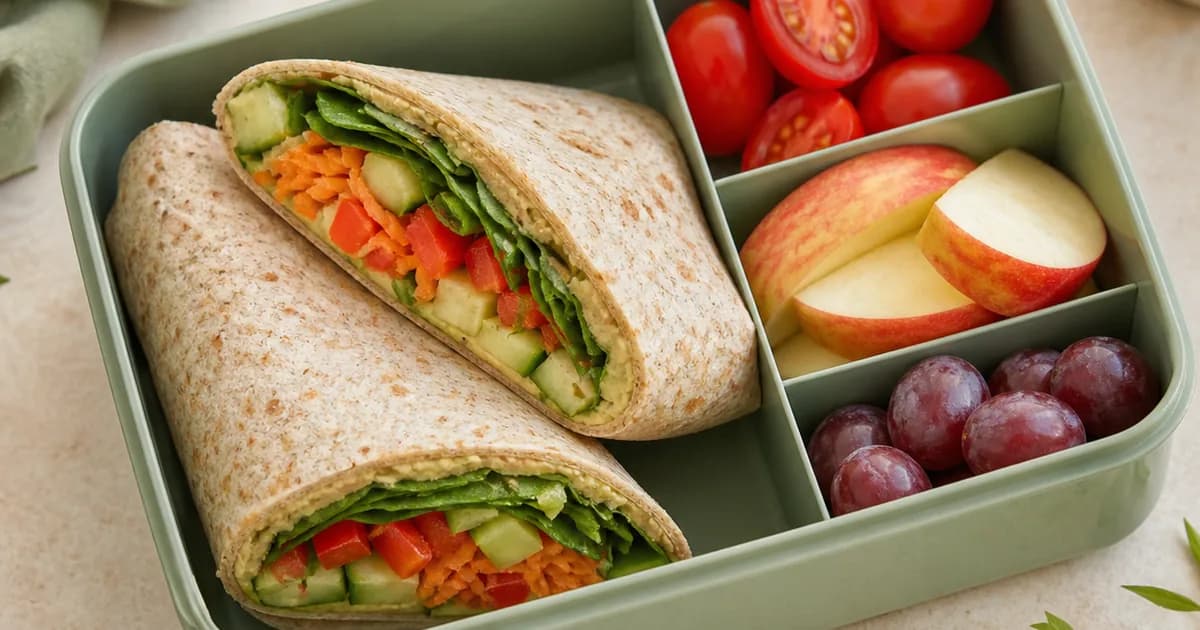
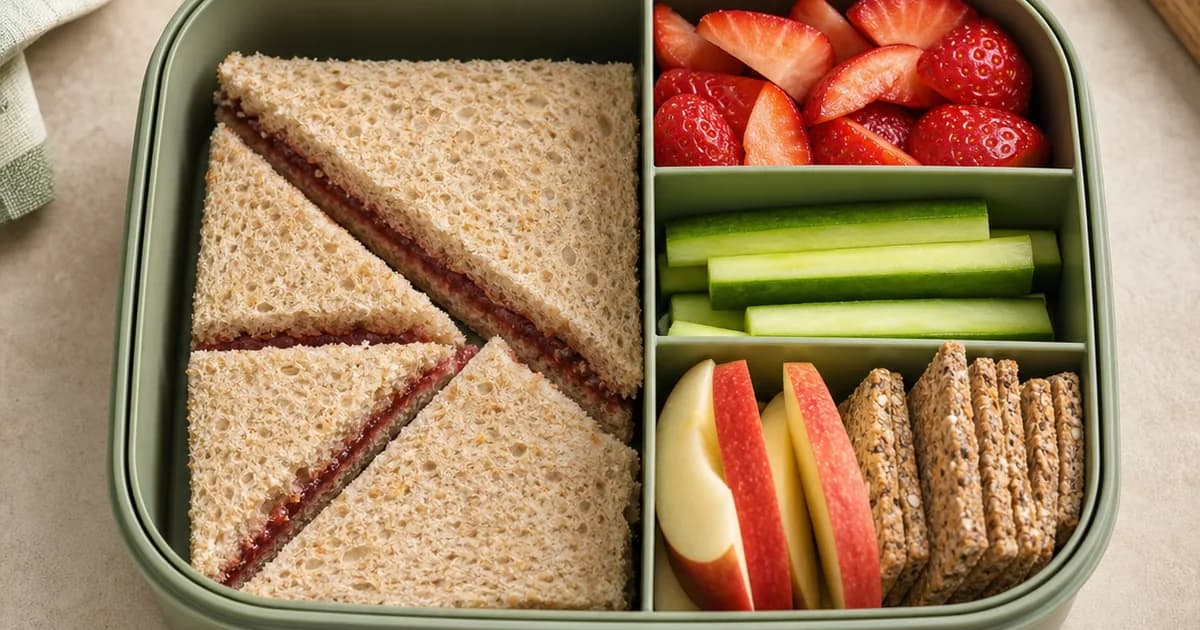
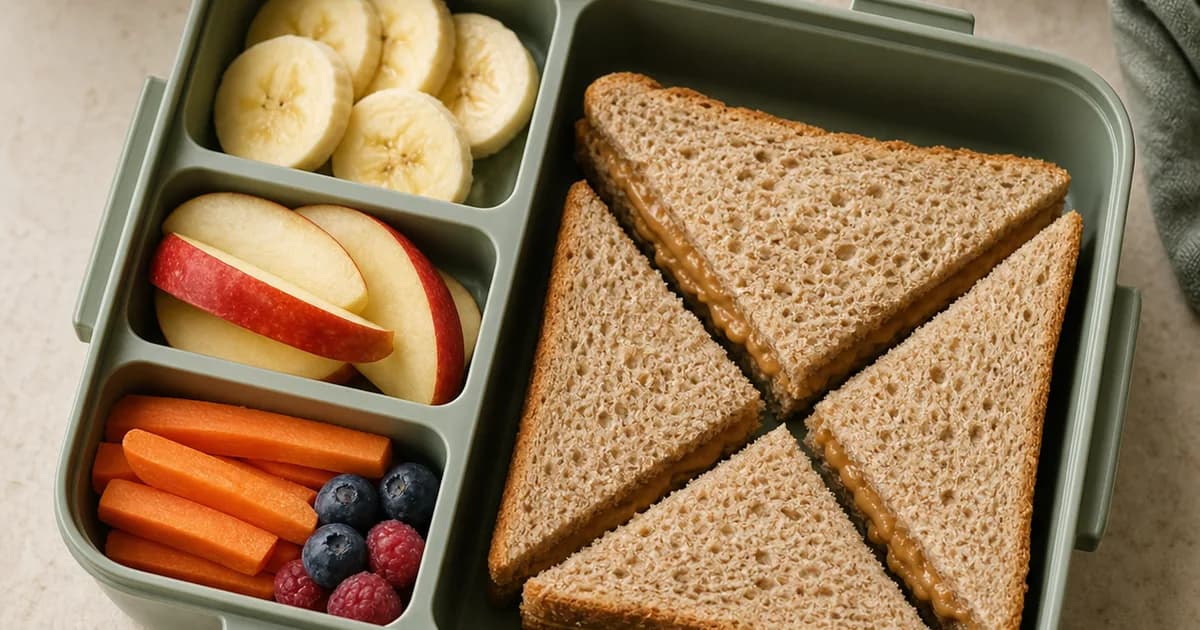
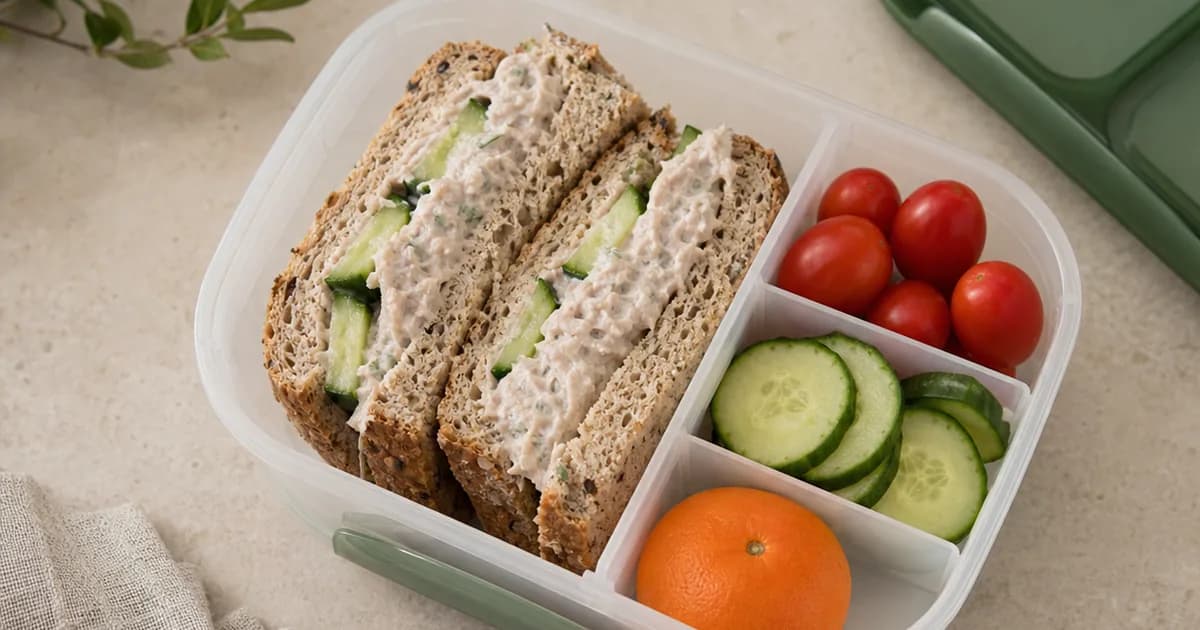
- 1 main item (sandwich, wrap, pasta, or sushi) — combines grains + protein
- 1-2 fruit/veg items (whole fruit, veg sticks, salad portion)
- 1 dairy item (cheese cubes, yoghurt pouch, milk)
- 1 small treat or snack (homemade muffin, crackers, popcorn)
What Each Food Group Actually Costs
This is the part most nutrition guides leave out, and it's the part that decides whether the advice survives contact with a Tuesday morning.
The figures below are regular Woolworths shelf prices — not specials — read from their online shop, October 2026. Each is costed as the share of a pack one child's lunch actually uses: two slices from a loaf, 30g from a 500g cheese block, one carrot from a bag.
| Food group | A cheap option | Cost per lunch | A dearer option |
|---|---|---|---|
| Protein | Sliced salami | 44c | Chicken breast, $2.00 |
| Dairy / calcium | Milk | 19c | Yoghurt (1kg tub), 99c |
| Fruit & veg | Carrot sticks | 22c | Grapes, $1.49 |
| Grains | Microwave rice | 20c | Bagel, $1.32 |
Hitting all four food groups costs about $1.05 at the cheap end. Take the midpoint of each row instead and it lands at $3.42.
So when a box comes out at $3.70 or more — which is where our median sits — the money isn't going on "being healthy". It's going on one or two specific choices, almost always the protein. Chicken breast at $2.00 a serve costs five times what sliced salami does, and roughly double what an egg does.
Three things this changes in practice
Fruit and veg are not the expensive part. A carrot is 22c and a banana is 48c. If your box is over budget, the fruit isn't why. This is the single most common misconception I run into.
Protein is the whole ballgame. It's the largest line in almost every box we cost. Eggs (86c), tinned legumes (30-62c) and cheese (55c) do the same nutritional job as chicken breast at a fraction of the price. That's not an argument against chicken — it's an argument for knowing which days you're spending on it.
Cheap does not mean nutritionally poor here. Sliced salami is the cheap option in the protein row above, but it's also processed and salty; eggs and legumes at 30-86c are the better everyday pick — and tinned chickpeas at 30c undercut it anyway. The point of the table isn't "buy the cheapest row" — it's that the nutritional target and the budget target are not in conflict nearly as often as people assume.
Macronutrient Targets for School-Age Children
Understanding macronutrients helps you assess whether a lunchbox is genuinely balanced or just looks colourful.
What the guidelines actually set — and what they don't
New Zealand uses the Nutrient Reference Values, and they are more selective than most lunchbox articles let on. Protein, fibre and fluids have published daily figures for children. Carbohydrate and fat do not. The Ministry of Health's own background paper says there were insufficient data to set a recommended intake, adequate intake or upper level for either, and the percentage-of-energy ranges sometimes quoted for them apply from age 14 upwards. So this table gives the actual recommendation where one exists, and what New Zealand children actually eat where one doesn't — rather than inventing a target.
| Ages 4–8 | Ages 9–13 | What kind of figure this is | |
|---|---|---|---|
| Protein | 20g/day | 40g boys, 35g girls | Recommended dietary intake |
| Fibre | 18g/day | 24g boys, 20g girls | Adequate intake |
| Fluids from drinks | 1.2L/day | 1.6L boys, 1.4L girls | Adequate intake |
| Energy | none set | none set | Median intake: 6.7–7.6 MJ at 5–6yr, 7.8–8.9 MJ at 7–10yr |
| Carbohydrate | none set | none set | Median intake: 250–279g at 4–8yr, 265–322g at 9–14yr |
| Fat | none set | none set | 31–35% of energy in NZ children's actual diets |
Source: Ministry of Health, Food and Nutrition Guidelines for Healthy Children and Young People (2–18 years), Tables 5, 7, 8, 12, 14 and 33. The intake figures come from the 2002 National Children's Nutrition Survey.
If you want one number to aim at for the box itself, the honest one is a share rather than a gram count. As above: the lunchbox covers morning tea and lunch, roughly 31.5% of the day's energy, so about a third of each daily row is the right ballpark for what leaves the house.
What This Looks Like in Practice
I have not calculated the nutrients of a specific lunch here, and I would rather not print a kilojoule figure I cannot source. What the table does tell you is where to put the attention. Protein is the nutrient New Zealand children are least likely to be short of — the 2002 survey found intakes exceeded requirements in every age group, at more than double the recommended amount. Fibre, iron and calcium are the ones that repay attention. You don't need exotic superfoods — just real food in the right proportions.
Portion Sizes: How Much Is Enough?
One of the most common mistakes is packing too much or too little. Children's stomachs are smaller than adults', and the eating break at school is short.
Age-Based Portion Guide
A rough starting point, not a published guideline — appetite varies from child to child.
| Item | Ages 5-7 | Ages 8-10 | Ages 11-13 |
|---|---|---|---|
| Sandwich | 1 slice folded or thin sandwich | 1 full sandwich | 1.5 sandwiches or large wrap |
| Fruit | 1 small piece or 1/2 cup | 1 medium piece | 1-2 pieces |
| Veg sticks | Small handful (4-5 sticks) | Medium handful (6-8 sticks) | Large handful |
| Yoghurt | 100g | 120-150g | 150-200g |
| Cheese | 1 slice or 15g cubes | 1.5 slices or 20g | 2 slices or 25g |
Tip: If your child consistently brings home uneaten food, reduce portions slightly rather than changing what you pack. Half a sandwich eaten is better than a full sandwich returned.
Common Nutritional Gaps in NZ Lunchboxes
The Ministry of Education's Ka Ora, Ka Ako nutrition evaluation measured the meals served under the free school lunch programme against a target of 33% of daily needs. Protein and most vitamins cleared it comfortably; iron came in under target in half the age and sex groups analysed, and calcium in every one of them. Those are programme meals rather than lunchboxes, so read it as a signal about which nutrients are genuinely hard to fit into a school meal, not as a finding about your box. It points the same way as what the 2002 Child Nutrition Survey found in children's diets overall, which is the better guide to what to watch:
Iron
Inadequate iron intake is not widespread among New Zealand children — the 2002 survey put it at 6.6% overall — but it is very unevenly spread: 12.0% of girls against 1.6% of boys, and 43.9% of girls who had started menstruating. If that describes your child, this is the one to pay attention to. Lunchbox sources include:
- Lean beef or lamb in sandwiches
- Canned tuna or salmon
- Hummus (chickpeas are a good plant-based iron source)
- Dark leafy greens (spinach in a wrap)
Iron is the one gap worth reading further on — plant-based sources need a vitamin C pairing to be absorbed properly. Iron-Rich Lunchbox Foods works through the combinations that actually fit in a lunchbox.
Calcium
Critical for growing bones, and the gap here is wider than most parents expect: 15.1% of children in the 2002 survey had inadequate calcium intake, rising to roughly 30% among 11–14 year olds. Include daily:
- Cheese (cubes, slices, or grated in a sandwich)
- Yoghurt (choose plain and add your own fruit to control sugar)
- Milk (in a small thermos or shelf-stable carton)
Fibre
New Zealand children are mildly short of fibre rather than dramatically so — median intakes run 15–21g against an adequate intake of 18–24g, and the gap widens with age. Closing it is easy:
- Wholegrain bread instead of white
- Whole fruits instead of fruit juice
- Raw vegetables (carrots, capsicum, cucumber)
- Popcorn (plain or lightly salted — a surprisingly good fibre source)
Vitamin D
Hard to get from food alone in NZ, but you can help with:
- Eggs (boiled eggs in the lunchbox)
- Canned salmon with bones
- Fortified milk
Reading Labels: A Quick Guide for NZ Parents
When buying packaged items at Woolworths or Pak'nSave, the nutrition information panel (NIP) tells you what matters. Here is what to check:
Use the per-100g column, not the per-serve one
Serve sizes are set by the manufacturer, so two products doing the same job in a lunchbox can declare wildly different serves — which makes the per-serve column close to useless for comparing them. Heart Foundation NZ puts the rule plainly: because serve size varies between products, the per-100g column is the one to compare on, and you want the food that is lower in saturated fat, sugar and sodium and higher in fibre.
I have deliberately not printed a table of pass/fail numbers here. The thresholds that circulate online mostly come from the UK traffic-light scheme, they differ by food category, and a single cut-off applied across the shop will fail perfectly good foods (plain nuts on saturated fat, tinned fish on sodium) while passing poor ones. Comparing two products in front of you on the same row of the panel is both easier and more reliable.
The Health Star Rating
New Zealand uses the Health Star Rating system on many packaged foods. The thing most people get wrong about it is the comparison it supports: the Heart Foundation is explicit that products should be compared within category. More stars is better when you are choosing between two muesli bars; it tells you very little when you hold a muesli bar against a yoghurt. And as they put it, a high star rating is not a licence to overindulge.
Practical tip: Compare the muesli bars at Pak'nSave against each other. Some sit at 2 stars (high sugar, low fibre), while others score 4 or more. The price difference is often minimal.
A Week of Balanced Lunchbox Examples
Here is a practical Monday-to-Friday week built on the food-group balance described above. It is an example of that shape, not a plan checked against any published nutrient reference:
Monday
- Chicken and lettuce wholegrain sandwich
- Carrot and cucumber sticks with hummus
- Kiwifruit
- Small cheese cubes
Tuesday
- Homemade sushi rolls (tuna and cucumber)
- Cherry tomatoes
- Banana
- Plain yoghurt with a drizzle of honey
Wednesday
- Pesto pasta salad with feta and spinach
- Apple slices
- Cheese and crackers
Thursday
- Hard-boiled eggs (2) with wholegrain crackers
- Capsicum strips and cucumber
- Mandarin
- Homemade banana muffin
Friday
- Ham and cheese wrap with lettuce
- Grapes
- Popcorn (small bag)
- Yoghurt pouch
Each of these lunches covers at least three of the four food groups.
Sugar: How Much Is Too Much?
The World Health Organisation's recommendation is a share of energy, not a gram count: free sugars below 10% of total daily energy, with additional benefit below 5%. The "25g a day" figure you often see quoted is the 5% level for an adult eating 2,000 calories, and it is not a children's guideline. For a New Zealand primary schooler eating the median 7.8–8.9 MJ a day, 10% works out around 47–53g of free sugars and the 5% level around 23–27g. Free sugars are the added sugars in processed foods, plus fruit juice and honey — not the natural sugars in whole fruit and plain milk.
Common Lunchbox Sugar Traps
The sugar figures below are rough, typical ranges for a single item, not readings from a particular product — compare the per-100g column of the packets in front of you, as the label section above explains.
| Item | Typical sugar per item | Better Alternative |
|---|---|---|
| Fruit juice box (250ml) | 24-28g | Water + whole fruit |
| Flavoured yoghurt (150g) | 18-22g | Plain yoghurt + berries |
| Muesli bar (standard) | 8-14g | Homemade oat slice |
| Fruit roll-up | 10-14g | Whole fruit |
| Chocolate chip biscuit | 8-10g | Wholemeal crackers + cheese |
A juice box and a flavoured yoghurt together come to roughly 42–50g. That is in the same territory as the whole day's 10% allowance, and comfortably past the 5% level — before the child has left school.
Hydration
Water is the best drink for school. The NZ Ministry of Health recommends children drink plain water throughout the day. Most NZ schools have water fountains, but a refillable bottle ensures consistent access.
- Ages 4-8: 1.2 litres a day from drinks
- Ages 9-13: 1.6 litres for boys, 1.4 for girls
Those are the Ministry of Health's adequate intakes for fluids from drinks, which is the figure worth carrying — food supplies water on top of it.
Avoid: fruit juice, flavoured water, sports drinks, and fizzy drinks in the lunchbox.
Working Within NZ School Policies
Most New Zealand primary schools have food policies that restrict certain items. Common restrictions include:
- Nut-free or nut-aware rules — common, but they are not the same thing; our allergy management guide explains the difference
- No sweets, lollies, or chocolate bars
- No fizzy drinks
- Some schools restrict chips and highly processed snacks
Check your school's specific policy at the start of the year. It is usually available on the school website or in the enrolment pack.
Quick Wins: Small Changes, Big Nutritional Impact
If you are looking to improve your child's lunchbox nutrition without a complete overhaul, start here:
- Switch white bread to wholegrain — adds fibre and B vitamins with zero extra effort
- Replace juice with water — the juice box is the biggest sugar line in the table above
- Add one extra vegetable — even just a few carrot sticks fills a nutrient gap
- Choose plain yoghurt — flavoured versions can contain as much sugar as dessert
- Include protein in the main item — keeps kids full until 3pm instead of crashing at 2pm
Further Reading
- NZ Ministry of Health: Food and Nutrition Guidelines for Children and Young People (2–18 years)
- Heart Foundation NZ: School Food Environments
- 5+ A Day NZ
Start Planning Balanced Lunches Today
You don't need to be a nutritionist to pack a great lunchbox. Focus on three food groups per meal, limit packaged sugar, and keep it simple. Consistency beats perfection — a "good enough" lunch eaten every day is far better than an Instagram-worthy meal that comes home uneaten.
References & Sources
About this article
This article was researched and written by Yong Jae Lee, a parent based in Auckland who runs Kiwi Lunchbox as a solo project. I am not a dietitian or a health professional, so nothing here is medical advice. Where an article rests on desk research rather than something I have cooked or used myself, it says so, and nutrition writing is aligned with New Zealand's healthy eating guidelines. If you spot an error or have a suggestion, please contact us.