Yong Jae Lee
Published: May 9, 2026 · Reviewed: September 2026 · 12 min read
Researched and written by Yong Jae Lee · Content follows NZ Ministry of Health guidelines
The 5-day prep routine I run for the first week of Term 1 — the Sunday session, the weekly shop, and the morning fail-safes that save the week.
The first Monday of Term 1 is the hardest morning of the NZ parenting year. Six weeks of late starts and long beach days, and suddenly the alarm goes at 6:50am, class starts at 8:45am, and somewhere between those two events you have to produce a lunchbox that complies with a heat warning and a school food policy you have not thought about since December.
This is the routine I run in our Auckland house. It is not perfect, and it is not the only way — but it survives Term 1 every year without a lunchbox crisis. The times below are rough but real: think of them as the order of operations, not a stopwatch study. If you are new to NZ schools or have a child starting Year 1 this term, this is what a workable week actually looks like from the inside.
One thing up front, because it is the part most weekly-routine articles get wrong: the weekday headings below are the rhythm, not a fixed menu. The mains here rotate between sandwiches and rice depending on what the night before left in the fridge. I have never managed to run a set Monday-to-Friday menu and I have stopped pretending I do — what actually repeats is the Sunday prep and the order of the morning, not the contents of the box.
Sunday: The Session That Saves the Week
Most of Term 1 stress comes from doing too much on Monday morning. The fix is to move the volume of work to Sunday evening, when nobody is in a hurry.
Sunday afternoon — the grocery run
I do the week's shop in person — usually Pak'nSave, alternating between the Ormiston and Botany stores, with the occasional top-up at Woolworths Meadowlands for anything cheaper there that week. It is rebuilt from the same template every time, with two or three swaps based on what is on this week's mailer:
- Wholegrain bread × 1 loaf
- Cheese block (Edam or Colby) × 1
- Plain Greek yoghurt × 1 tub
- Cucumbers × 2
- Carrots × 1kg bag
- Cherry tomatoes × 1 punnet
- Apples × 6
- Bananas × 6
- Mandarins (in season) × 6
- Sliced chicken × 1 pack
- Hummus × 1 tub
This template was built from the Ministry of Health's Healthy Food and Drink Guidance — see the nutrition guide for the full breakdown. Priced against the regular shelf prices we track at Pak'nSave, the list above comes to about NZ$50 — before any of the swaps you make off the mailer, which usually pull it lower.
That is the whole list, not one child's lunches: the cheese block, the yoghurt tub and the hummus get eaten by everyone in the house across the week. The per-lunchbox number is further down, and the two are meant to reconcile.
If you would rather check the actual best store this week, see Pak'nSave vs Woolworths: Lunchbox Staples Price Comparison.
Wash and sort
- Wash the week's fruit and sort out roughly what goes in which day. Air-dry on a tea towel.
- Blanch a head of broccoli and portion it. It goes in cold, and it is the vegetable that actually gets eaten in this house.
- Cut the carrots into sticks. A container with a paper towel and a little water keeps them crisp.
- Cut cucumbers into half-rounds. Same container method.
- Slice the cheese into cube portions and put them in a small sealed container.
- Wash the cherry tomatoes and put them straight back in the punnet.
Boil and chill
- Hard-boil about ten eggs — cold-water start, simmer 8 minutes, then an ice bath. That covers the week with a few spare.
- If there is rice this week, it gets cooked fresh the night before rather than batch-frozen. Rice does not survive freezing here — see the midweek section below.
Freeze the drink bottles
We run three small 330ml plastic drink bottles, two-thirds full of water, lids loose, into the freezer overnight. Three is enough for five school days because they rotate — the one that comes home goes straight back in the freezer that evening, so there is always a frozen one ready for the morning. They act as both ice pack and drink, and they are the single most important food-safety tool for an Auckland Term 1 week (see NZ Lunchbox Food Safety for why).
Done
The fridge now contains: washed fruit sorted roughly by day, blanched broccoli, cut carrots and cucumber, cheese portions, about ten boiled eggs, a tub of hummus, sliced chicken, yoghurt, and bread. The drink bottles are in the freezer.
What the week costs
Because someone always asks: a complete lunchbox from our menu set — main, fruit and a second snack — runs a median of about $3.90 on current tracked prices, with a realistic floor around $2. Five days comes to about $19.50 a child for the week.
That figure comes from pricing the ingredients, not from a guess. The shelf prices behind it are published in our price index, and the free planner will build and cost a week around whatever is actually on special. I mention it here because the Sunday session above is where the cost is decided — once you are standing in the kitchen on Thursday morning, the number is already set.
Monday: The First Morning of the Year
This is the morning that breaks people. She is exhausted, the bag is missing a sock, the school uniform was put away in the wrong drawer, and the lunchbox needs to be packed and out the door by 8:10am.
6:50am — Alarm
Coffee. Five minutes of staring at the kitchen counter. The morning starts.
Lunchbox stage 1
Pull the lunchbox from the dishwasher. Wipe dry. Open it on the counter. Mentally walk through:
- One main
- One fruit
- One vegetable
- One dairy
- One protein
- One drink
If yours is a Year 1, also: smaller portions (see the nutrition guide for age-appropriate portions).
Pack the main
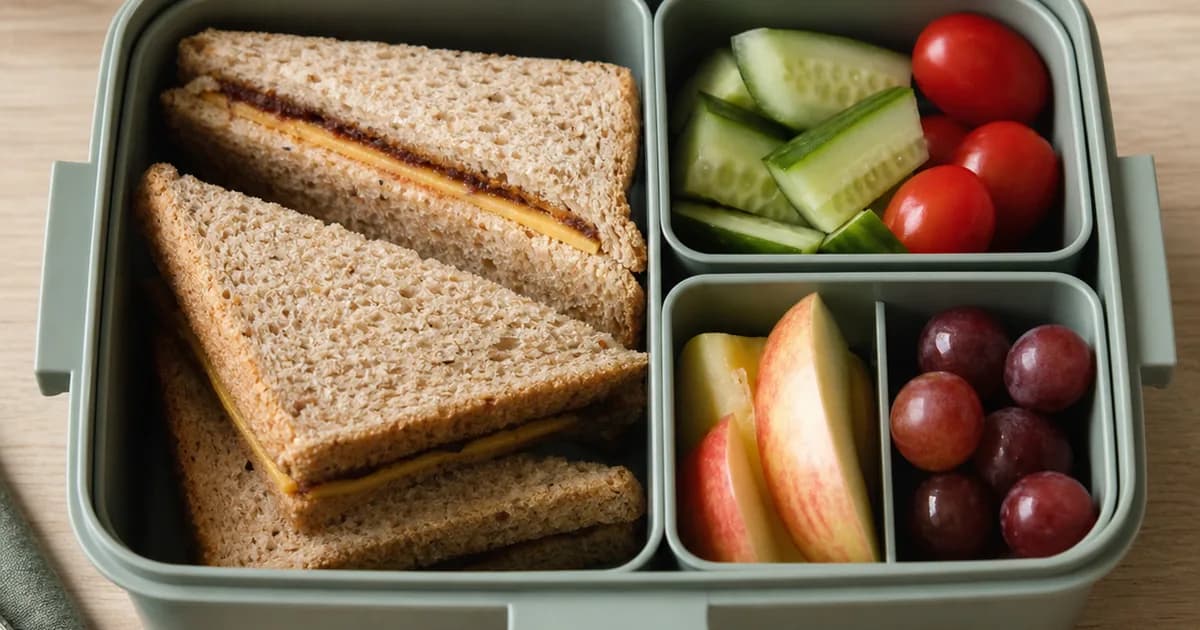
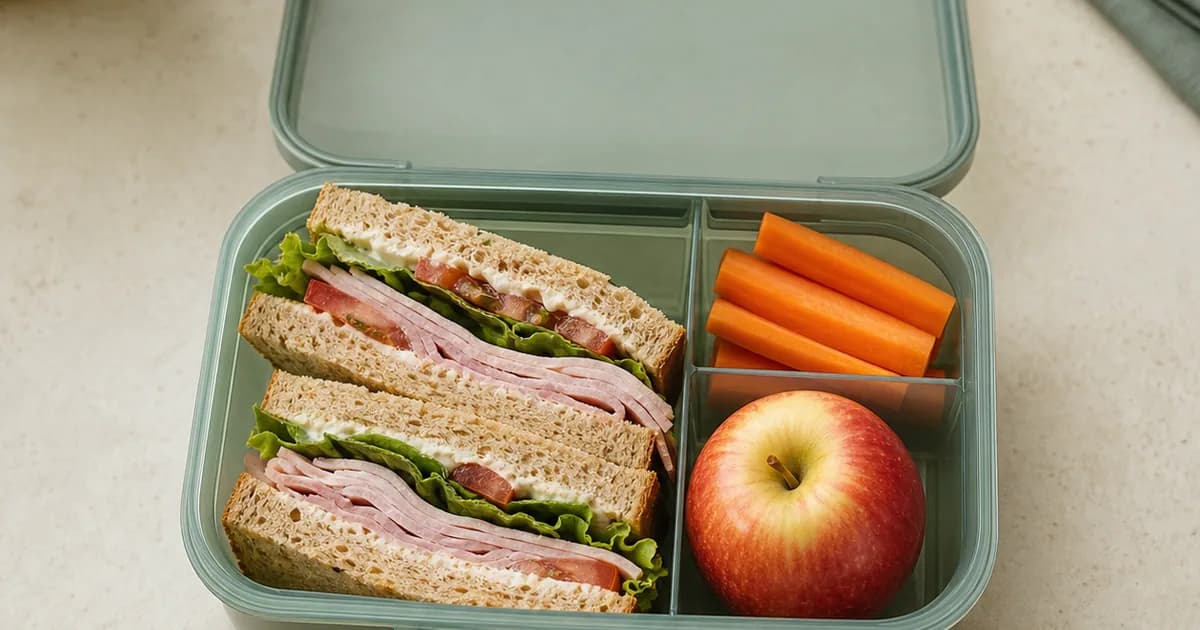
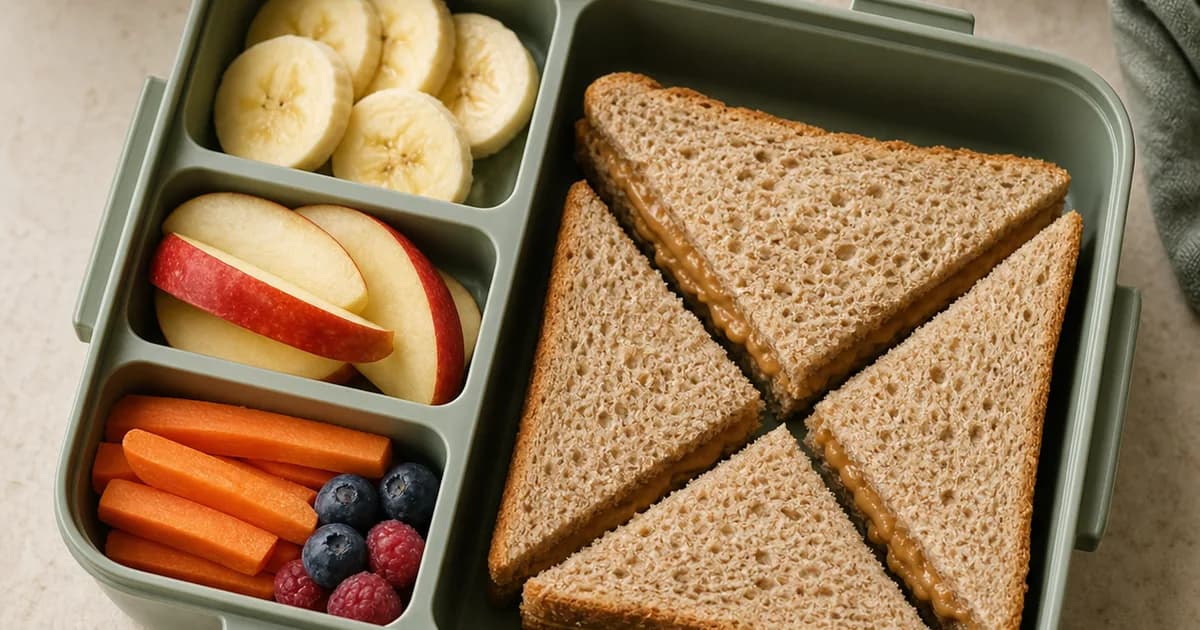
Whatever the rotation lands on. Most often that is a sandwich — wholegrain bread, sliced chicken and hummus, cucumber — cut in half. (A Year 1 will usually only get through half; keep the rest for the next day. An older child takes the whole one.)
Pack everything else
- 1 apple
- 4 carrot sticks + 4 cucumber rounds
- 1 cheese cube
- 1 hard-boiled egg (peeled and in a small container)
- 1 frozen drink bottle from the freezer
The frozen bottle goes into the bag right alongside the lunchbox — it doubles as the cold source that keeps everything out of the danger zone until lunch.
7:10am — Done
About twenty minutes from cold start to packed bag. That only works because of Sunday's prep — the fruit is washed, the carrots are cut, the eggs are boiled. (Our back-to-school prep checklist is what that Sunday is built on.) Washing and cutting everything on the morning is what turns twenty minutes into a morning that collapses.
7:15am — Wake her
The lunchbox is already done and out of the way, which is the whole point. From here it is breakfast, uniform and bag — about ten more minutes of me in it, and the rest is her.
8:10am — Out the door
8:35am — At school
8:45am — Class starts
This is the Term 1 baseline. Five out of five days in the first week should hit this rhythm. If even one morning slips, the rest of the week catches up.
Tuesday: Use Yesterday's Knowledge
By Tuesday I know what came home untouched. If the carrot sticks came back at 50%, today's lunch gets cucumber instead. If the apple came back whole, today's fruit is grapes or a mandarin (more finishable).
This is not "fussy kid management" — this is observational feedback. Children's food preferences shift over time, and the lunchbox is a low-pressure place to test what works.
A typical lunch pattern that day
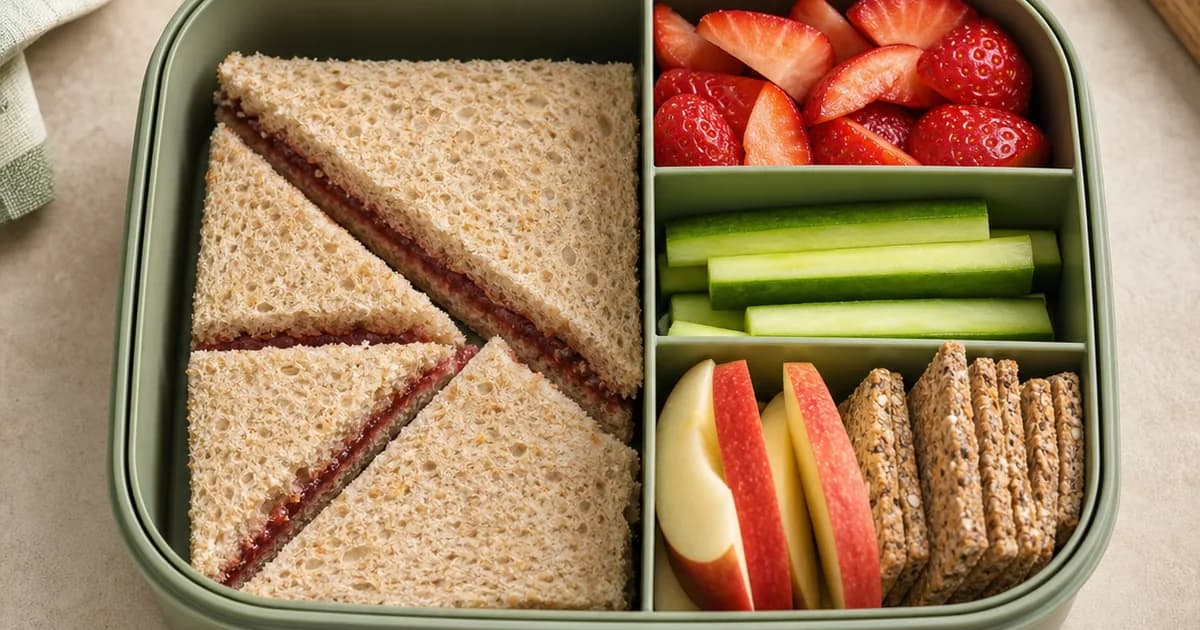
- Main: Half a wholegrain sandwich with cheese + cucumber + a thin layer of hummus
- Fruit: 1 mandarin
- Vegetable: Cherry tomatoes (a switch from yesterday's carrots)
- Dairy: Small Greek yoghurt with a few berries
- Protein: 1 boiled egg
- Drink: Frozen drink bottle from the freezer
By Tuesday the packing is quicker — not because anything is different, but because I am not re-deciding what goes in.
Midweek: Breaking the Bread Run
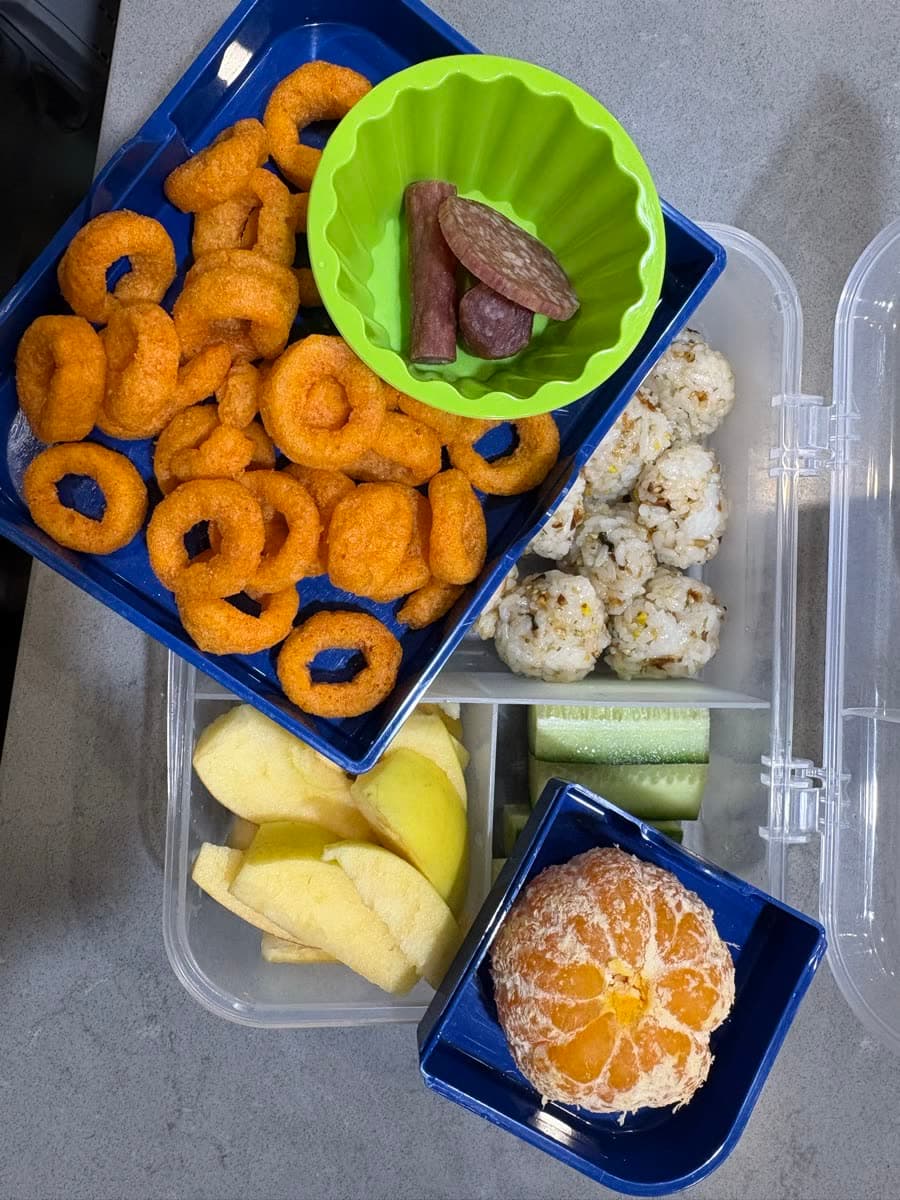
Somewhere around the middle of the week the bread runs out of goodwill, and the lunch that breaks it here is rice — onigiri, or a quick kimbap rolled from the previous night's dinner rice. That is a habit that comes with being a Korean family in East Auckland: the rice and nori come from the Korean grocer, the furikake from the Japanese one, and it takes about ten minutes to roll a few.
I cannot put this on a fixed weekday, and I have stopped trying. It happens on the mornings when there is leftover rice from the night before — which is also, usually, the morning I am running late. That is the honest version: it is a fallback that earns its place, not a scheduled slot.
The rule that shapes the whole week: rice gets made fresh
Rice does not survive freezing and reheating here. My daughter eats by texture, and the moment rice turns soft and mushy it is an instant no. So rice-based lunches are rolled from the previous night's leftover rice and packed cold the next morning — never batch-frozen weeks ahead.
That single lesson is why the rest of the prep looks the way it does: I only batch-cook and freeze the dishes that actually hold their texture, and make the rest fresh. Batch cooking to save money covers what does and does not survive a freezer.
Onigiri also happens to be nut-free without trying, which matters if your school has a nut-free policy — see nut-free school lunches.
The rice-day lunch pattern
- Main: Onigiri (or kimbap) rolled from last night's rice, packed cold
- Fruit: 1 apple
- Vegetable: Carrot sticks
- Dairy: Cheese cube
- Protein: Tuna and mayonnaise in the onigiri filling
- Drink: Frozen drink bottle from the freezer
The Active Days: More Energy, More Snack
There is no single hard day here, and that took me a while to work out. Swimming is Monday, PE is Thursday, and cheerleading lands on Wednesday and Friday. So instead of one big lunchbox on one fixed day, the bigger lunch moves around the week and follows whatever is on that day's timetable.
The adjustment is the same wherever it lands: more energy, and an extra snack.
The active-day adaptation
- Main: Full wholegrain sandwich (a bigger main than usual)
- Fruit: 1 banana + 1 mandarin
- Vegetable: Cucumber + cherry tomatoes
- Dairy: Yoghurt pouch (within 15g sugar)
- Protein: 1 boiled egg
- Snack: 1 muesli bar (under 15g sugar) + extra cheese cube
- Drink: Frozen drink bottle from the freezer + a small plain milk
This is roughly a Year-level-up lunchbox, accounting for the higher activity level. Ministry of Health guidance is explicit that energy needs vary by activity — so the day the bigger lunch goes in is whichever day the timetable is heaviest, not a day you can fix in advance.
Friday: Treat Day Within Limits
Friday is our treat day — but within the Healthy Food and Drink Guidance framework, the treat is one Amber/Red item, not the whole lunchbox.
The Friday pattern
- Main: Whatever the rotation lands on — most often a sandwich with chicken
- Fruit: 1 apple
- Vegetable: Carrot sticks (optional — Friday I do not push it)
- Dairy: Cheese cube
- Protein: Chicken in the main
- Treat: Small piece of dark chocolate, OR a homemade banana muffin, OR a chocolate-coated muesli bar
- Drink: Frozen drink bottle from the freezer
The Friday treat is intentional, and it is our house rule rather than official guidance — the Ministry of Health's Green/Amber/Red system is written for food that schools provide, not for what parents pack. One small treat inside the week, and inside whatever your school allows. A lunchbox a child won't eat saves nothing.
Saturday: Lunchbox Reset
Saturday morning I run the dishwasher hot cycle with all the empty lunchboxes, all the drink bottles, all the silicone seals. This is the deep clean that prevents mould and bacterial buildup over a long Term — see NZ Lunchbox Food Safety for the MPI rationale.
I also throw away anything that came home half-eaten on Friday. The 2-hour rule does not stretch over a weekend.
Sunday: Repeat
The cycle resets: one prep session on Sunday evening, then mornings that stay at about twenty minutes instead of collapsing. Over a 10-week Term that is the difference between a routine and a scramble — and it prevents the small mistakes that compound (a forgotten frozen bottle, a lukewarm yoghurt, a string of uneaten lunchboxes in a row).
Four Pitfalls I Hit in My First Term 1
1. Packing the same lunch every day
Even with the prep template above, I rotate the main, the fruit, and the vegetable to avoid lunchbox boredom. The boring lunchbox is the unfinished lunchbox.
2. Forgetting the school's allergy policy
Auckland schools have a wide range of nut-related policies — strict nut-free, "no nuts in shared areas", or no restrictions. Read your school's policy in the first week and update your shopping list immediately. The Nut-Free Schools Guide covers this in detail.
3. Skipping the frozen bottle on cool days
Auckland Term 1 has cooler days mixed in. The temptation is to skip the frozen bottle and just use a normal water bottle. The risk: even a 20°C morning can become a 27°C afternoon, and the bag is in the danger zone for the whole afternoon if there is no cold source. I now freeze the bottle every day regardless of forecast.
4. Underestimating the Year 1 transition
The first month of Year 1 is genuinely overwhelming for a 5-year-old. Lunch portions need to be smaller than you think, particularly in the first 2 weeks. See the nutrition guide for age-appropriate portions.
References
- Ministry of Education NZ: NZ school term dates — education.govt.nz
- Ministry of Health NZ: Healthy Food and Drink Guidance for Schools, 2020 update.
- Ministry for Primary Industries (NZ Food Safety): consumer food safety at home.
This article is the personal Term-1 routine of the operator behind Kiwi Lunchbox. Your school's exact start time, allergy policy, and the local climate may differ — adapt the rhythm to your conditions. It is informational, not medical or dietary advice.
Plan Your Own Term 1 Routine
The Kiwi Lunchbox Planner generates a weekly menu based on your child's Year level, your allergy constraints, and this week's NZ supermarket sales. The Sunday session gets a lot shorter once you have the menu in hand.
References & Sources
About this article
This article was researched and written by Yong Jae Lee, a parent based in Auckland who runs Kiwi Lunchbox as a solo project. I am not a dietitian or a health professional, so nothing here is medical advice. Where an article rests on desk research rather than something I have cooked or used myself, it says so, and nutrition writing is aligned with New Zealand's healthy eating guidelines. If you spot an error or have a suggestion, please contact us.