Yong Jae Lee
Published: February 5, 2026 · Reviewed: September 2026 · 13 min read
Researched and written by Yong Jae Lee · Content follows NZ Ministry of Health guidelines
With grocery prices rising, here are practical lunchbox ideas that cost under $3 per serving — without cutting corners on nutrition.
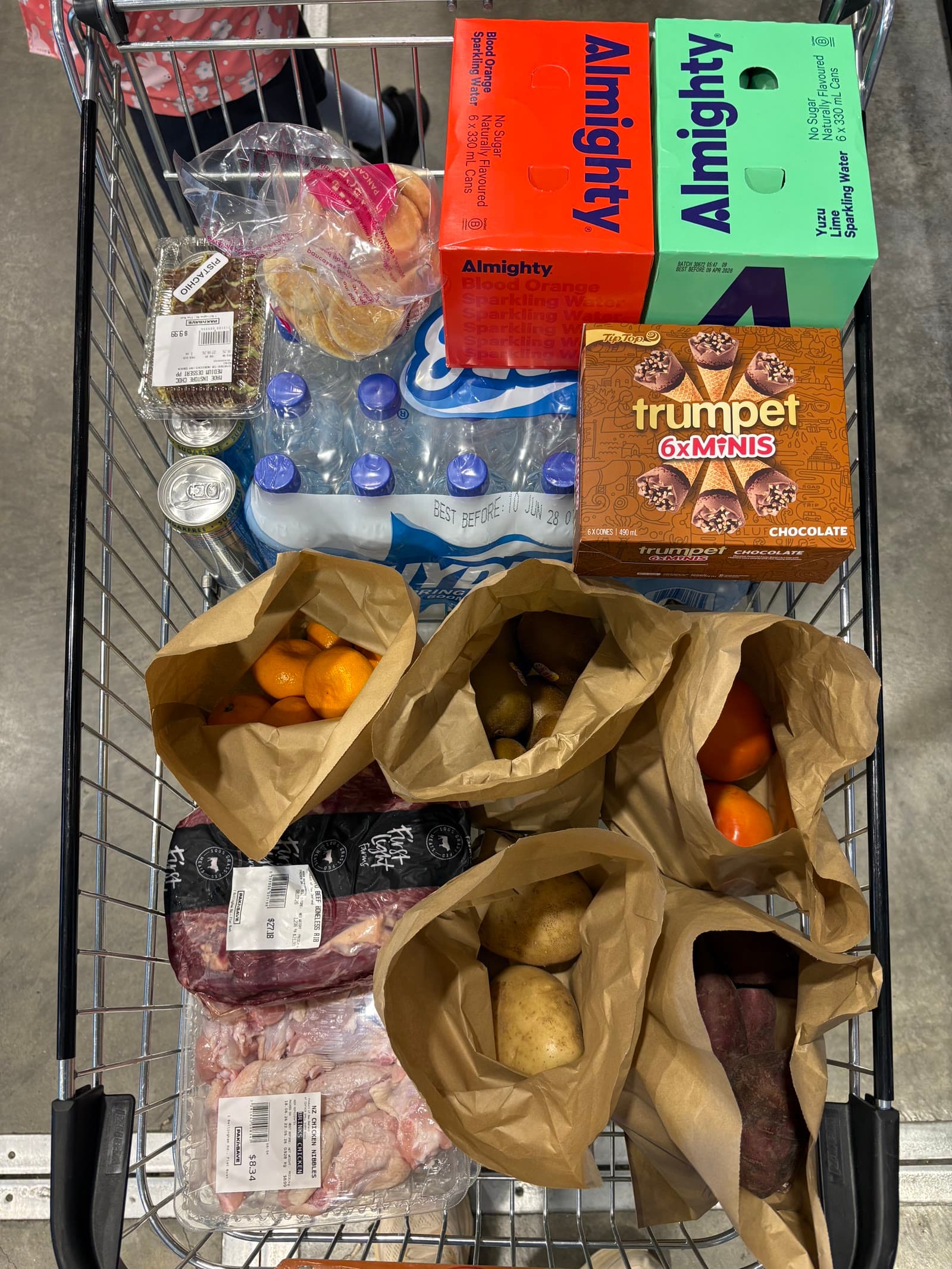
Around May last year, I sat down with a week's worth of lunchbox receipts and added them up. Each meal was running well over $5.50, and honestly, I let out a long sigh. The culprits were obvious — winter tomatoes priced like gold, and individually wrapped snacks. I went back through the supermarket aisles, leaning hard on frozen vegetables and whatever fruit was actually in season, and pulled the per-meal cost back under $3. The kid still came home saying "this is yum" — that's the budget list this post is built around. For the full week-by-week planning framework — shopping order, batch-cook schedule and a $15/week breakdown — see our budget lunchbox planning guide.
One thing I have stopped pretending: in a normal week I do not buy every lunchbox item from one supermarket. I shop mostly at the Ormiston PAK'nSAVE and Woolworths — and the Botany branches when they are on the way — and the things that move the total most are the boring basics: bread, wraps, cheese, yoghurt, and fruit. So those are the prices I check first.
The Real Cost of School Lunches in New Zealand
Statistics NZ data shows food prices in New Zealand rose significantly between 2022 and 2025 — with grocery items up an average of 22% over that period. For a family with two school-age children packing five lunches a week, the annual cost can easily reach $1,500–$2,500 depending on what you buy.
That is the national picture. Here is ours, from the same shelves: canned tuna rose 73% ($2.30 to $3.99, first read 2026-05-16); butter rose 60% ($5.79 to $9.29, first read 2026-05-16); and cherry tomatoes fell 50% ($5.95 to $2.99, first read 2026-08-02). Those are the three biggest moves among the 18 staples we have tracked at all three chains, measured from each item's own first reading — we started the columns on different dates, so a single "since May" figure would be wrong.
One of those is not inflation. Produce swings with the season in a way that packaged food does not, which is why we keep the reading dates attached to every number rather than averaging them away. Every reading we hold is on the price history page.
What the cheapest mains actually cost
I cost every menu in our database against tracked supermarket prices for the NZ Lunchbox Price Index. Here are the cheapest mains as they currently stand — main item only, before you add fruit and a snack:
| Main | Cost |
|---|---|
| Mac 'n Cheese | 55c |
| Peanut Butter Sandwich | 65c |
| Pasta Salad | 89c |
| Jam Sandwich | 93c |
| Savoury Rice | $1.15 |
| Lentil Soup | $1.15 |
| Cinnamon Roll | $1.17 |
Add a piece of fruit and a second snack — which is what actually goes in the box — and these land between $2 and $2.60. That's the real floor. A complete lunchbox across our whole menu set has a median of about $3.70, so the cheap end is genuinely half the typical box, not a rounding difference.
Two things the list makes obvious. The cheapest mains are carbohydrate-led, and several are low on protein — a jam sandwich at 93c is cheap because it's mostly bread and sugar. And the single cheapest option, mac 'n cheese at 55c, is also one of the more filling, which is why it earns its place rather than just being the bottom of a table.
The good news: some of the most nutritious lunchbox options are also the cheapest. This guide shows how to pack a complete, balanced lunch for under $3 per serving.
Prices note: The tables and sentences built from our NZ Lunchbox Price Index are regular shelf prices (not on special), read from each chain's own price feed with the store set to Auckland, and they refresh when we re-read the shelf. Prices vary by region and store type. Rather than guess at the gap between the two chains: across the 19 items in the NZ Lunchbox Price Index that both stores had priced, Pak'nSave came to $87.64 against Woolworths' $97.80 — about 10% — read on 2026-10-18. Of the 14 items we can follow back to our first round on 2026-05-16, Pak'nSave is cheaper on 11. Woolworths was cheaper on lettuce and sliced ham.
The Budget Lunchbox Formula
Every solid school lunch covers four components:
| Component | Budget pick | Notes |
|---|---|---|
| Carb | Wholegrain bread (2 slices) | Freeze half the loaf so none of it goes mouldy |
| Protein | Egg / tuna / cheese / chickpeas | See the per-serve costs below before assuming eggs are the cheap one |
| Fruit/Veg | Seasonal fruit + 1 veg | Buy what is in season |
| Snack | Crackers / homemade muffin | Homemade baking uses pantry staples |
On the prices we track, an egg is not the cheap protein it is often taken for: cheese runs 55c a serve — cheaper than black beans (62c), an egg (86c), sliced ham (66c) and chicken breast ($2.00), though tinned chickpeas (30c) undercut it. The egg-free article goes through the same comparison from the other side.
A correction. This section used to carry a hand-typed price for each component, totalling $1.25–$2.65 a lunch, and two item-by-item tables "checked in March 2026". Several of those figures were a long way off what we now read from the shelf — eggs were listed at 43c each, against about 92c each for the free-range dozen we track at Pak'nSave, $10.99 a dozen — and the totals sat below the cheapest complete box our own costing produces (about $2). They have been taken out rather than left to mislead. The two-chain comparison, item by item and refreshed every week, is in Pak'nSave vs Woolworths: lunchbox staples.
Seasonal fruit guide (NZ seasons)
| Fruit | Season |
|---|---|
| Apples (Gala, Fuji) | Feb–Jun |
| Feijoas | Mar–May (often free from neighbours!) |
| Mandarins | May–Aug |
| Bananas | Year-round |
| Oranges | Jun–Sep |
| Kiwifruit | May–Oct |
| Strawberries | Nov–Jan |
5 Budget Lunch Ideas
These are the five combinations this post was originally built around. They used to carry hand-costed totals of $1.55 to $2.40; the note under the Weekly Budget Tracker explains why those were retracted. For what a box actually costs on this week's prices, use the tracker below or the free planner.
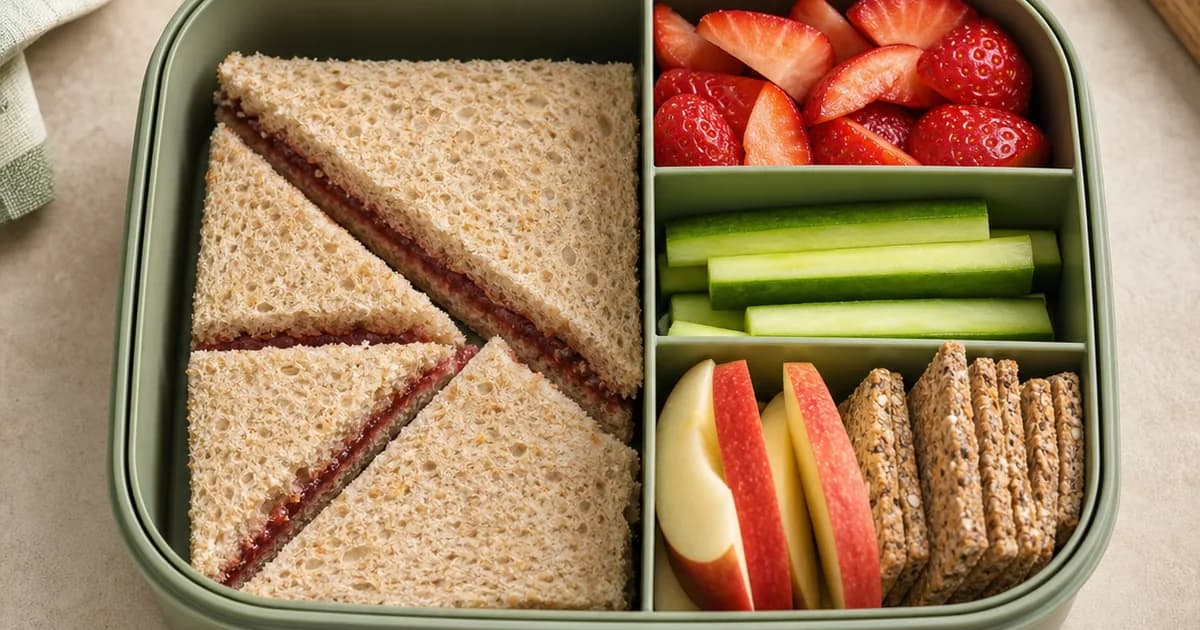
1. Egg & Cheese Sandwich
- 2 slices wholegrain bread
- 1 hard-boiled egg
- 1 slice tasty cheese
- 2 lettuce leaves
- 1 apple
2. Tuna & Rice Box
- ½ cup cooked rice
- ½ can tuna
- 1 tsp soy sauce
- Cucumber slices
- 1 mandarin
- 4 rice crackers
3. Pasta Salad
- ¾ cup cooked pasta
- 2 tbsp pesto
- 6 cherry tomatoes
- 1 banana
- 4 crackers
- 20g feta, optional
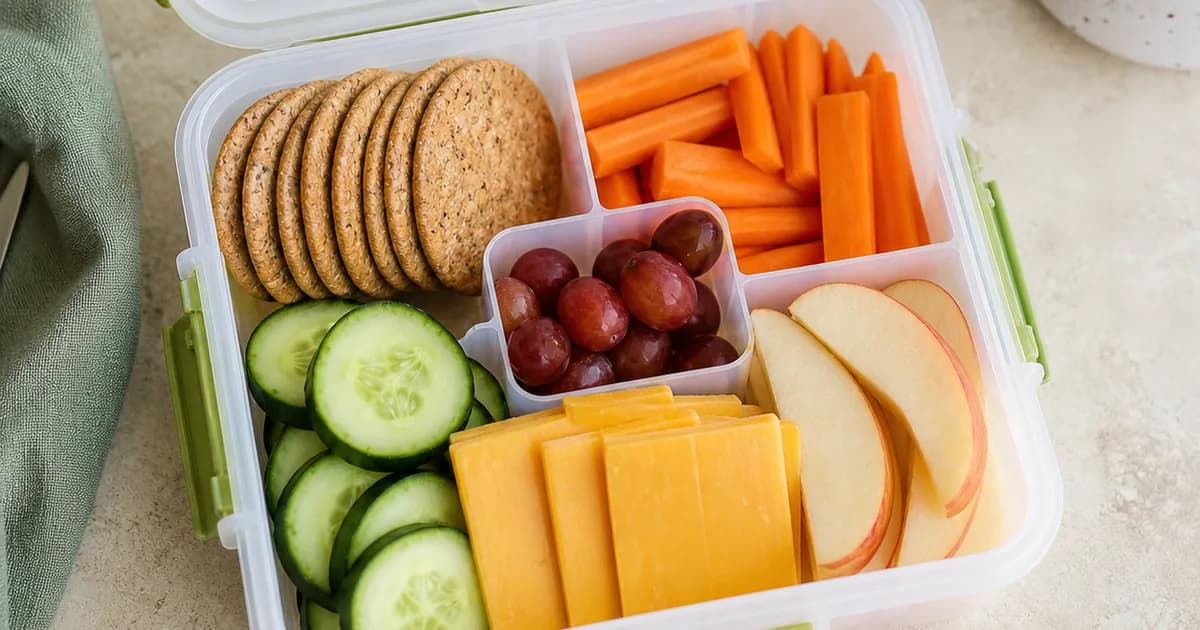
4. Cheese & Crackers Snack Box
- 8 crackers
- 30g tasty cheese
- Carrot sticks
- 2 tbsp hummus
- 1 apple
- Homemade oat slice (1 piece, see below)
5. Leftover Chicken Wrap
- 1 tortilla
- 50g leftover roast chicken
- 1 tbsp mayo
- Lettuce + tomato
- Small bunch grapes
- 2 rice crackers
The Whole Chicken Strategy
Buying a whole chicken is one of the better budget moves for school lunches. Here's the maths:
- Woolworths whole chicken (size 16): ~$9.00
- Pak'nSave whole chicken (size 16): ~$7.50
- Usable meat yield: ~800–900g after roasting
- Per 50g lunchbox portion: $0.50 (Woolworths) / $0.42 (PnS)
Pre-cut chicken breast at PnS: ~$14.99/kg = $0.75 per 50g portion
Whole chicken is usually the cheapest way to buy chicken per gram of usable protein — we have not measured that gap on a fixed basket, so treat it as a direction rather than a number. Roast on Sunday, portion out for Mon–Wed lunches, freeze the rest.
Homemade Snack Batch: Oat & Banana Slice
Makes 16 pieces.
Ingredients:
- 2 cups rolled oats
- 2 ripe bananas
- 2 tbsp honey
- 1 egg
- ½ cup raisins
- 1 tsp cinnamon
Mix, press into a lined tray, bake at 180°C for 20 minutes. Cut into 16 pieces. Freeze in batches of 5. Takes 25 minutes total.
Most of it is pantry staples, which is where homemade baking gets its edge over a packet: one bag of oats holds many batches' worth. We have not costed this slice against a store-bought muesli bar on current prices, so there is no saving figure here — an earlier version quoted one, and its ingredient prices did not add up to its own total.
Weekly Budget Tracker
Use this to estimate your weekly spend before you shop:
| Menu | Category | Cost per box |
|---|---|---|
| Mac 'n Cheese | Hot | $2.03 |
| Jam Sandwich | Sandwich | $2.41 |
| Savoury Rice | Hot | $2.63 |
| Cinnamon Roll | Baking | $2.66 |
| Tamagoyaki (Rolled Omelette) | Cold | $2.78 |
| Total (1 child) | $12.51/week | |
| Total (2 children) | $25.02/week | |
| Annual (2 children, 40 weeks) | $1,001 |
These are the cheapest school-safe boxes in the menu set, priced from the same weekly Woolworths reading that feeds the planner — main plus a fruit snack and one other snack. The Budget Lunchbox Planning Guide explains how the week is chosen.
This table used to be hand-typed, at $1.55 to $2.40 a box for a $9.75 week. Those figures were roughly half what the same food costs at the prices I track, and they sat below the cheapest box our own costing produces. It is generated now, so it moves when the shelf does.
Set that against buying lunch instead. Pre-made and convenience lunches run about $4–6 per child per day; for two children over 40 school weeks that is $1,600–$2,400 a year, against $1,001 for the week above. The gap is $599–$1,399 — and that is against the cheap end of our own range, so treat it as the best case rather than the typical one.
NZ Government Support for Families
If your family is struggling with food costs, there are NZ-specific resources that can help:
Ka Ora, Ka Ako (Healthy School Lunches Programme): The NZ government's free school lunch programme provides a healthy lunch to every child at participating schools. As of 2026, over 1,000 NZ schools participate. Check if your child's school is part of the programme — if so, you may not need to pack a lunch at all (or can supplement the provided lunch with extra snacks). Visit the Ministry of Education website for a list of participating schools.
Community food support:
- KidsCan — provides food, clothing, and health support to children through partner schools and early childhood centres
- Salvation Army food parcels — available to families in need through local centres
- Community food banks — many NZ communities have food banks that provide grocery items
Budgeting support:
- MoneyTalks (0800 345 123) — free financial helpline run by FinCap, the national body for budgeting services, with government funding
- Budget Advisory Services — free face-to-face budgeting help available in most NZ cities and towns
There is no shame in using these services — they exist specifically to help NZ families feed their children well.
Buying in Bulk: The Smart NZ Approach
Buying the larger pack is usually cheaper per serve — but check the unit price on the shelf ticket rather than assuming it. The staples where it tends to matter for lunchboxes are cheese blocks, crackers (a big box against individual packs), pasta, rice, canned tuna and frozen vegetables.
A correction. A table of bulk prices used to sit here. It was typed by hand, and it did not survive a check against the prices we track: it put a 1kg cheese block at about $11.50, when the 500g Mainland block alone was $8.99 at Pak'nSave and $10.50 at Woolworths in our latest reading. We have not tracked the larger pack sizes, so the table is gone rather than corrected.
Storage tip: Buying in bulk only saves money if nothing goes to waste. Freeze bread in portions, wrap cheese tightly in cling film and portion into weekly amounts, and store pasta and rice in airtight containers to maintain freshness.
Cheap and Nutritious NZ Ingredients for Lunchboxes
Some of the most nutritious lunchbox ingredients are also the cheapest:
- Eggs: about 92c each for the free-range dozen we track at Pak'nSave, $10.99 a dozen. One of the most nutrient-dense foods available, though not the cheapest protein per serve on our numbers. 6g protein, iron, vitamin D, and B12 per egg. Hard-boil 6 on Sunday for the week.
- Rolled oats (~$0.15 per serve): Use in muffins, Anzac biscuits, bliss balls, and as a porridge base. Incredibly versatile.
- Canned chickpeas (~$1.20 per can at Pak'nSave): Make hummus at home for a fraction of the cost of pre-made. One can makes a week's worth of lunchbox hummus.
- Bananas: Available year-round, and high in potassium and natural energy.
- Frozen vegetables (~$3.00/kg at Pak'nSave): Just as nutritious as fresh (often more so, as they are frozen at peak freshness). Add to fried rice, pasta, and soup.
- Kumara (~$3.50/kg): A uniquely NZ ingredient that is cheap, versatile, and packed with vitamin A. Roast, mash into baking, or make chips.
The Freezer Strategy for Budget Lunchboxes
A well-stocked freezer is the budget-conscious family's greatest lunchbox asset. Here is how to build a freezer inventory that slashes costs:
Sunday baking freezer rotation: Spend 60-90 minutes on one Sunday per month baking in bulk. A single session can produce:
- 24 Anzac biscuits
- 12 banana muffins
- 20 bliss balls
Total yield: 56 snack items — enough for 2-3 weeks of lunchbox treats for two children. An earlier version of this section put the ingredients at $8–$10 and the store-bought equivalent at $35–$50; its own per-item prices multiplied out to neither figure, and we have not re-costed either on current prices, so both are gone.
Freezing bread: Buy bread when it is on special and freeze it immediately. Frozen bread defrosts perfectly and prevents the common problem of bread going mouldy before the loaf is finished — a major source of food waste in NZ households.
Batch-cooking protein: Cook a large batch of bolognese, shredded chicken, or tuna salad on Sunday. Portion into daily containers. Use Monday-Wednesday portions from the fridge; freeze Thursday-Friday portions and defrost the night before.
Free and Nearly-Free Lunchbox Ingredients in NZ
Some of the best lunchbox ingredients cost almost nothing:
Feijoas (March-May): If you do not have your own tree, ask neighbours — feijoa trees are ubiquitous in NZ and many people are desperate to give away their surplus. Cut in half and pack with a small spoon. Nutritious, delicious, and free.
Garden produce: A $5 packet of carrot seeds produces enough carrots for an entire year of lunchboxes. Cherry tomato plants ($5 each from Mitre 10) produce hundreds of tomatoes over summer. Even a small balcony can support a few pots.
Leftover dinner portions: The cheapest lunchbox is one you did not have to "make" at all. Cook 50% extra at dinner and portion into a lunchbox container. The marginal ingredient cost is roughly $1.00-$1.50 — and the prep time is zero.
Water: Replacing juice boxes ($1.00-$1.50 each) with a refillable water bottle saves $200-$300 per child per year. Many NZ schools also ask for water only in the lunchbox, so check your school's policy — the swap may already be expected.
Track Your Spending with Kiwi Lunchbox
The planner uses real Woolworths prices to estimate your weekly lunchbox cost — see estimated cost per meal before you shop.
About this article
This article was researched and written by Yong Jae Lee, a parent based in Auckland who runs Kiwi Lunchbox as a solo project. I am not a dietitian or a health professional, so nothing here is medical advice. Where an article rests on desk research rather than something I have cooked or used myself, it says so, and nutrition writing is aligned with New Zealand's healthy eating guidelines. If you spot an error or have a suggestion, please contact us.