Yong Jae Lee
Published: March 25, 2026 · Reviewed: September 2026 · 9 min read
Researched and written by Yong Jae Lee · Content follows NZ Ministry of Health guidelines
I compared the prices of 20 common lunchbox staples at Pak'nSave and Woolworths. Here's where to shop for the best deals on school lunch ingredients in NZ.
This table updates itself. The prices below are read each week from each chain's own online shop — Woolworths on 2026-10-18, Pak'nSave Ormiston on 2026-10-18 — and this page is generated from the same data as the NZ Lunchbox Price Index. You are not reading a snapshot from months ago. What changed, and why I was wrong. This article used to carry a hand-typed table from a March 2026 store walk, with a note saying I could not refresh the Pak'nSave column because "Pak'nSave sets prices per store and publishes no feed I can read." That was a guess I never checked, and it was wrong — Pak'nSave publishes store-level prices on its own website. It held this page stale for about five months. Both columns are now read weekly. One trade-off, stated plainly. These are online (Click & Collect) prices, not shelf tags, and the two are not guaranteed to match. And a correction I am leaving visible. The "$1.41 per lunch" figure further down came from an earlier costing model we later found to be wrong by roughly four times, and it used the cheapest price of either store on every item — which is not how anyone shops. Across our full menu set a complete lunchbox (main, fruit, second snack) works out at a median of about $3.70, with a realistic floor around $2 to $2.60. Use those, not $1.41. The free planner costs a week on this week's real prices.
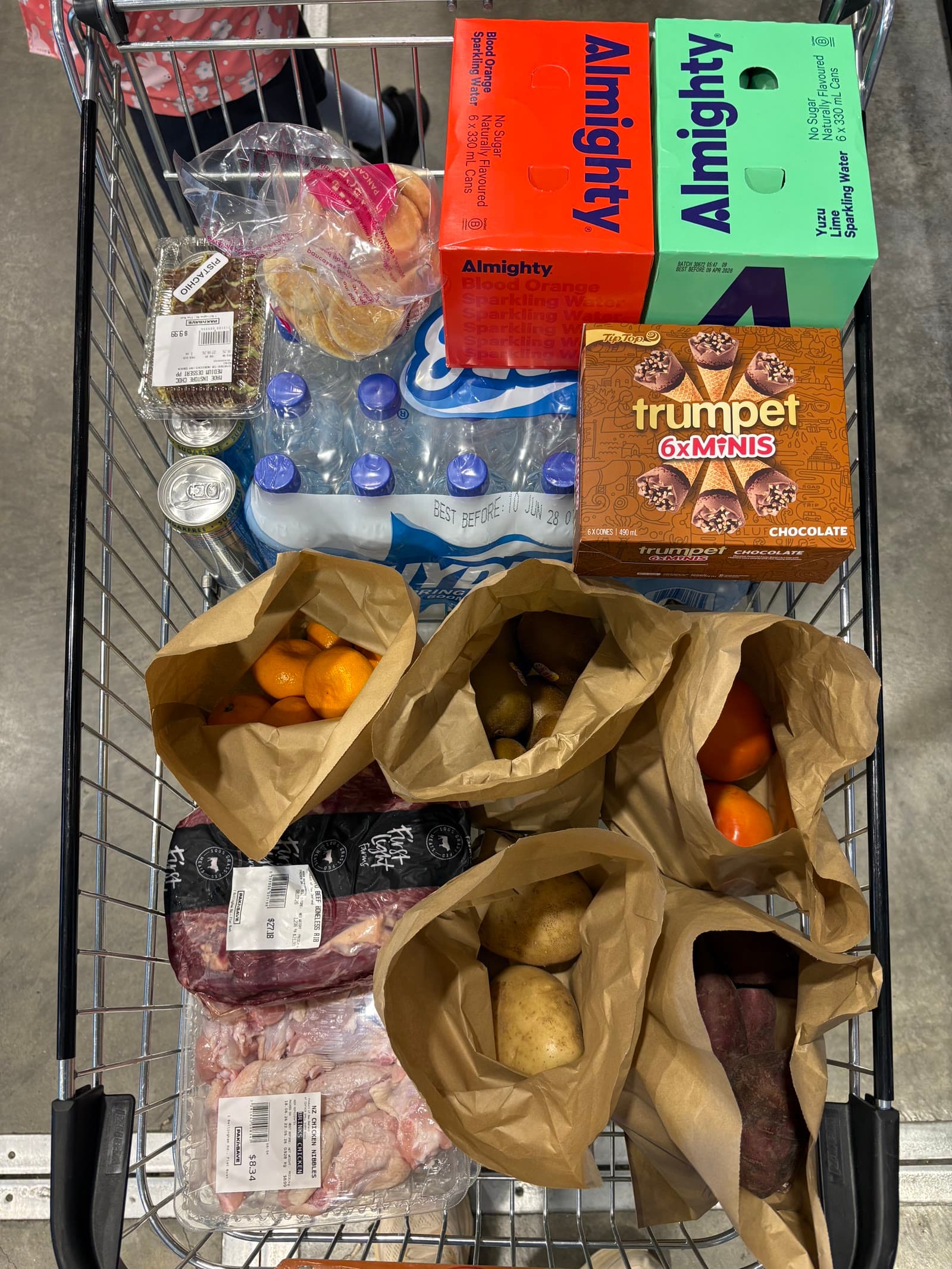
The trip that started this was a deliberate Saturday in East Auckland — same shopping list, two stops: Pak'nSave Ormiston and the Woolworths nearby. The biggest surprise was a block of cheese: same brand, same size, a $2.50 difference. Loose fruit went the other way. That walk is what set the basket below; the prices in it are now refreshed every week without me going back.
The Great NZ Supermarket Debate
Every NZ parent has an opinion: Pak'nSave or Woolworths? For lunchbox shopping specifically, the answer isn't as simple as "Pak'nSave is always cheaper" — it usually wins the basket, but not every item, and which items it loses changes from week to week.
I track the same 20 lunchbox staples at both chains. The Pak'nSave store is Ormiston, in East Auckland, which is where I actually shop. Your local branch may differ — Pak'nSave in particular sets prices store by store, so treat these as one real store rather than a national average.
Two rules keep the table honest. Specials are excluded: when an item is on special at Pak'nSave that week, its regular price is not in the response, and dropping a special into an index makes the whole thing look like deflation — so that row is left at its previous value and marked. And an item only counts in the scorecard if both columns were read within a month of each other; anything older is shown but excluded.
The Full Price Comparison
Woolworths read 2026-10-18 · Pak'nSave Ormiston read 2026-10-18
| Item | Pak'nSave | Woolworths | Winner |
|---|---|---|---|
| Wholegrain Bread (700g) | $2.99 | $4.40 | Pak'nSave |
| Wraps 6-pack — Farrah's Premium White | $5.69 | $6.99 | Pak'nSave |
| Bagels 4-pack | $3.69 | $3.79 | Pak'nSave |
| Apples (1kg) — Granny Smith | $2.99 | $4.95 | Pak'nSave |
| Bananas (1kg) | $3.59 | $3.99 | Pak'nSave |
| Carrots (1kg) | $1.99 | $2.19 | Pak'nSave |
| Cherry Tomatoes (180g) | $3.29 | $2.99 | Woolworths |
| Cucumber — Telegraph | $2.49 | $2.49 | Tie |
| Lettuce — Iceberg | $2.99 | $2.20 | Woolworths |
| Sliced Chicken (200g) — Deli sliced | $4.99 | $6.50 | Pak'nSave |
| Canned Tuna (185g) — Sealord in springwater | $3.99 | $4.50 | Pak'nSave |
| Sliced Ham (200g) | $6.49 | $5.99 | Woolworths |
| Cheese Block (500g) — Mainland mild | $8.99 | $10.50 | Pak'nSave |
| Eggs (12-pack) — Free range | $10.99 | $11.79 | _excluded (on special at Pak'nSave, so no regular price)_ |
| Yoghurt (1kg) — Fresh 'n Fruity Greek natural | $7.29 | $8.25 | Pak'nSave |
| Butter (500g) — Anchor | $9.29 | $9.70 | Pak'nSave |
| Rice (1kg) — Long grain white | $3.39 | $3.40 | Pak'nSave |
| Pasta (500g) — Penne | $1.52 | $1.79 | Pak'nSave |
| Hummus (220g) — Obela Classic | $4.99 | $5.39 | Pak'nSave |
| Peanut Butter (380g) — Pic's smooth | $6.99 | $7.79 | Pak'nSave |
The Scorecard
- Pak'nSave cheaper on: 15 of the 19 comparable items
- Woolworths cheaper on: 3
- Tie: 1
Basket total for those 19 items:
- Pak'nSave: $87.64
- Woolworths: $97.80
- Difference: $10.16 — about 10.4% cheaper at Pak'nSave
Of the 20 items tracked, 19 are currently priced at both chains on comparable dates. The rest are shown above with the reason they are excluded, rather than estimated — an estimated number in a price index is worse than a missing one.
Where Woolworths Wins
Woolworths isn't always more expensive, and there are good reasons to shop there:
It is never a clean sweep. In the current read, Woolworths is cheaper on cherry tomatoes (180g), lettuce (iceberg) and sliced ham (200g). Which items those are moves week to week, and fresh produce is where it moves most — so if fruit and salad vegetables are a big part of your child's lunchbox, the cheaper store is genuinely not a fixed answer.
The gap also is not spread evenly across the basket. Where the supermarket gap actually is works through the current round and finds that a handful of items carry most of it — which changes what you would actually do about it.
Weekly specials: Woolworths' specials run Monday to Sunday, and a special can undercut Pak'nSave's everyday price for that week. Some of them are Everyday Rewards member prices, which you only get with the card — the planner reads each week's mailer and marks member-only prices as such.
Convenience: if a Woolworths is closer, the fuel and time of a longer drive can eat a small price gap. Only you can put a number on that.
Where Pak'nSave Wins
In the current read, Pak'nSave is cheaper on wholegrain bread (700g), wraps 6-pack (farrah's premium white), bagels 4-pack, apples (1kg) (granny smith), bananas (1kg), carrots (1kg), sliced chicken (200g) (deli sliced), canned tuna (185g) (sealord in springwater), cheese block (500g) (mainland mild), yoghurt (1kg) (fresh 'n fruity greek natural), butter (500g) (anchor), rice (1kg) (long grain white), pasta (500g) (penne), hummus (220g) (obela classic) and peanut butter (380g) (pic's smooth). That list is generated from the same table above, so it changes when the prices do — I would rather show you this week's list than repeat a rule of thumb about which aisles Pak'nSave "always" wins.
The Smart Hybrid Strategy
The most cost-effective approach for many NZ families:
1. Do your main weekly shop where the scorecard above says the basket is cheaper — this round that is Pak'nSave 2. Check the "Where Woolworths Wins" list before a top-up shop — it is short, and it changes week to week 3. Check both chains' weekly specials for lunchbox items (they run Monday to Sunday) 4. Stock up when your preferred store has a deep discount on non-perishables (canned tuna, pasta, rice, crackers)
Price Per Lunch Breakdown
Using the cheapest available prices between both stores, here's what a week of budget lunches costs:
| Day | Lunch | Cost |
|---|---|---|
| Mon | Ham & cheese sandwich + apple + carrot sticks | $1.45 |
| Tue | Tuna & corn wrap + mandarin | $1.60 |
| Wed | Pasta salad with cheese + banana | $1.30 |
| Thu | Egg fried rice + cucumber sticks | $0.90 |
| Fri | Hummus & crackers + cherry tomatoes + kiwifruit | $1.80 |
Weekly total: $7.05 — that's $1.41 per lunch average.
⚠️ This is the figure corrected at the top of the article. It assumes the cheapest price of either store on every item, on March prices, and it was produced by a costing model we have since found to be wrong by about four times. Our current figure for a complete lunchbox — main, fruit and a second snack — is a median of about $3.70, ranging from roughly $2 to $7.10 depending on the main. I have left the original table here because deleting it would hide the error rather than correct it.
When to Buy What
Seasonal awareness saves money:
- Autumn (March-May): Apples, pears, feijoas are cheapest. Buy NZ-grown.
- Winter (June-Aug): Citrus (mandarins, oranges) at their cheapest. Root vegetables (carrots, kumara) are abundant.
- Spring (Sep-Nov): Berries start appearing. Asparagus and peas are in season.
- Summer (Dec-Feb): Stone fruit, berries, watermelon. Tomatoes and capsicums are cheapest.
Buying seasonal fruit instead of imported out-of-season fruit can cut the fruit portion of your shop noticeably. Stats NZ's Food Price Index shows steep seasonal swings in produce, but we have not put a single percentage on it — the size of the swing depends entirely on which fruit you compare.
What About New World?
New World often gets overlooked in the NZ supermarket comparison, but it is worth considering:
- Pricing: I now read New World's prices each week as well. Three supermarkets compared puts all three chains side by side on the same basket, so I am not going to quote a percentage for it here that the data might contradict next week.
- Specials: New World runs its own weekly specials independently of Woolworths (they are different companies — New World and Pak'nSave are both Foodstuffs). Check the New World app for deals on lunchbox items.
- Location advantage: In some towns, New World may be the most convenient supermarket, and the time saved can offset the slight price premium.
What changed in this review (28 September 2026)
I re-read this article against current data and removed claims I could not stand behind:
- a section on online grocery shopping that said Pak'nSave offers no online shopping — while the table at the top of this page is read from Pak'nSave's own online store
- references to the Woolworths Onecard (now Everyday Rewards) and to specials starting on Wednesdays (they start on Mondays)
- seasonal produce prices, homebrand savings of "$5–$8 a week", a Costco section and a meal-kit comparison, none of which I had measured
- a "$0.85 fried rice lunchbox" line that contradicted this site's own costing
- a fixed list of aisles Pak'nSave "wins decisively", now replaced by this week's list from the data
The $1.41 table above stays, with its correction, because deleting it would hide the error.
Track Your Spending
The Kiwi Lunchbox Planner estimates costs for each meal plan using current NZ supermarket prices, helping you see your weekly lunchbox budget at a glance.
About this article
This article was researched and written by Yong Jae Lee, a parent based in Auckland who runs Kiwi Lunchbox as a solo project. I am not a dietitian or a health professional, so nothing here is medical advice. Where an article rests on desk research rather than something I have cooked or used myself, it says so, and nutrition writing is aligned with New Zealand's healthy eating guidelines. If you spot an error or have a suggestion, please contact us.