Yong Jae Lee
Published: August 20, 2026 · Reviewed: September 2026 · 11 min read
Researched and written by Yong Jae Lee · Content follows NZ Ministry of Health guidelines
The planner's no-cook filter leaves 28 menus that never meet a stove — and why skipping the cooking does not let you skip the ice pack.
Three prep styles sit in the planner's sidebar, and only one of them is a promise about appliances. Make-ahead means the cooking happened last night. Cook-fresh means it happens this morning. No-cook means it does not happen at all — no hob, no oven, no kettle, no reheating, on any day, by anyone.
That is a narrower promise than it sounds, and a more useful one for being narrow. It is also the one most easily misread as a safety claim, which it is not. Taking the stove out removes a task from the morning. It does not remove the ice pack from the bag.
Ticking No-cook leaves 28 of our 94 menus standing. What follows is what those 28 have in common, what they do not, and where this article stops because we have not measured the thing it would need to keep going.
Where No-Cook Sits Next to Batch Cooking
The library splits three ways: 28 no-cook, 47 make-ahead, 19 cook-fresh. The first two get confused constantly, because both of them empty the morning. They are different ideas and they fail in different ways.
Batch cooking is about when you cook. The stove is still involved; it has been moved to a time when you are not also finding a PE uniform. The saving is real and it comes mostly from pack sizes rather than from bulk technique — our batch cooking article works that out per serve. The costs are real too: a session has to be scheduled, containers have to be labelled, and food has to survive a fridge or a freezer without turning into something your child will refuse.
No-cook is about whether you cook. There is no session to schedule, nothing to reheat, nothing that has to come back from a freezer with its texture intact. The work moves from the kitchen to the trolley — a no-cook week is bought more than it is made, so the shopping list carries the weight that the Sunday session carries in the other model.
It is worth noticing that the standard NZ advice for saving lunchbox time is the other route. The Heart Foundation of New Zealand's time-saving tips say: "Cook extra at dinner and use leftovers, or use your days off to batch cook items that can go in the fridge or freezer." That is good advice, and it assumes there is a cooking session somewhere to borrow from. This article is for the weeks when there is not one.
One line in the data marks the far boundary: not one of the 28 is thermos-friendly. A flask lunch is a cooked meal by definition, which is why thermos lunches are the opposite end of the same problem. Nothing sits in both groups, so the two filters never stack.
The 28 Menus That Never Meet a Stove
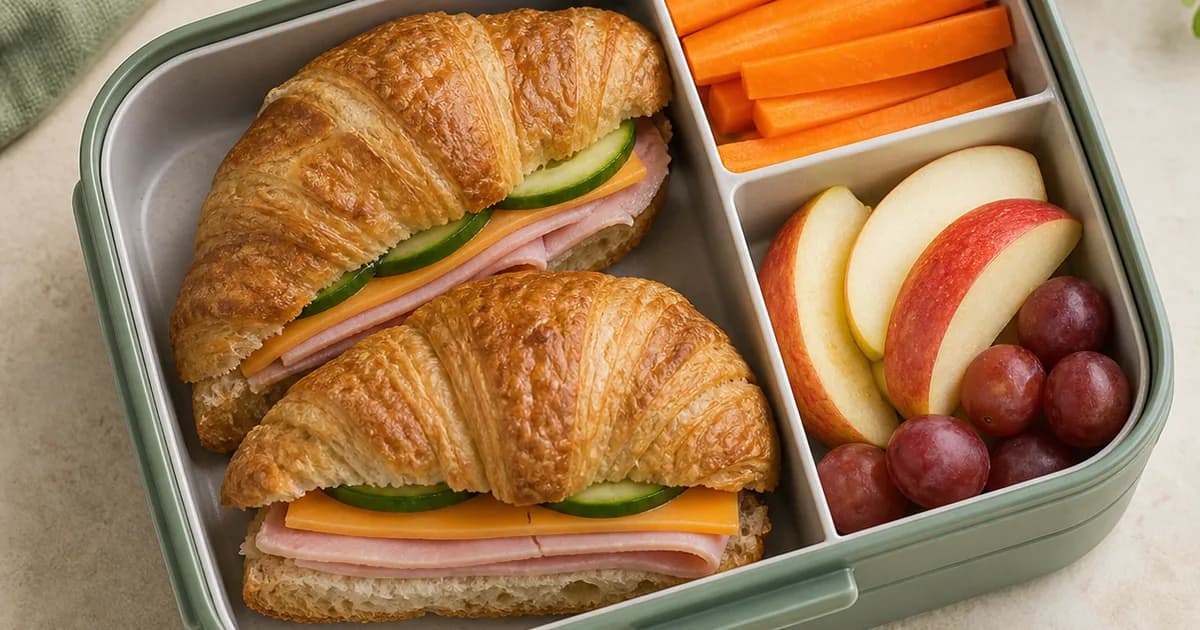
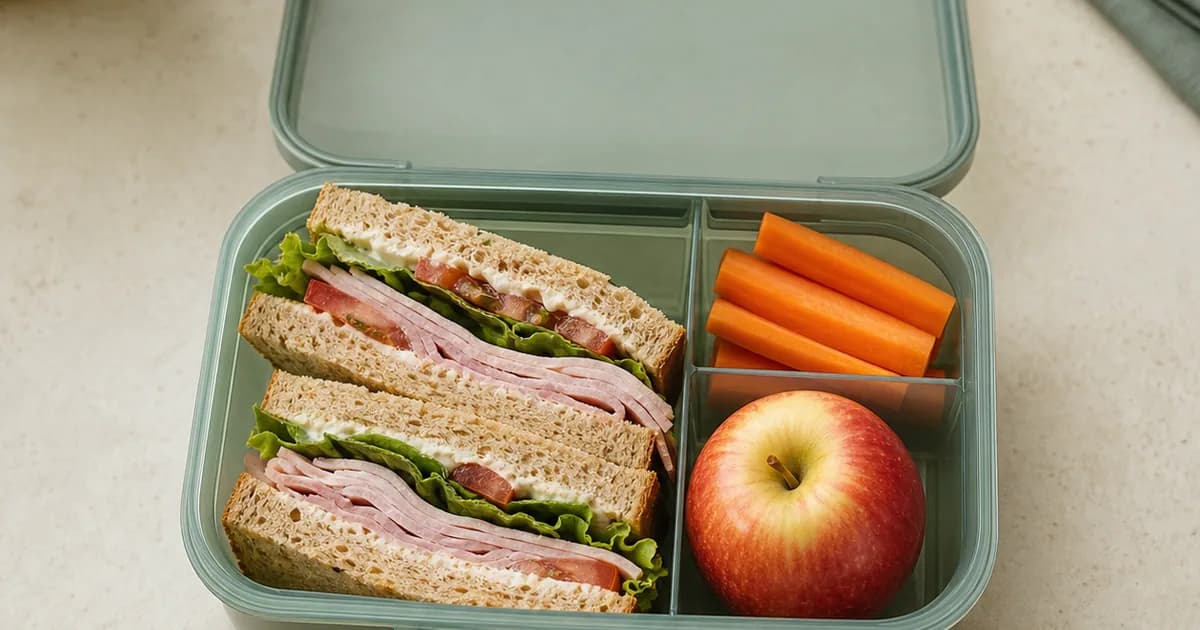
The first few, straight from the data: Ham & Cheese Croissant, Chicken Wrap, Turkey Club Sandwich, Bagel & Cream Cheese, Smoked Salmon Bagel, Tuna Mayo Sandwich, Roast Beef Roll, Veggie Wrap.
The full list is generated rather than curated, so it is not shaped around any other restriction:
- Ham & Cheese Croissant
- Chicken Wrap
- Turkey Club Sandwich
- Bagel & Cream Cheese
- Smoked Salmon Bagel
- Tuna Mayo Sandwich
- Roast Beef Roll
- Veggie Wrap
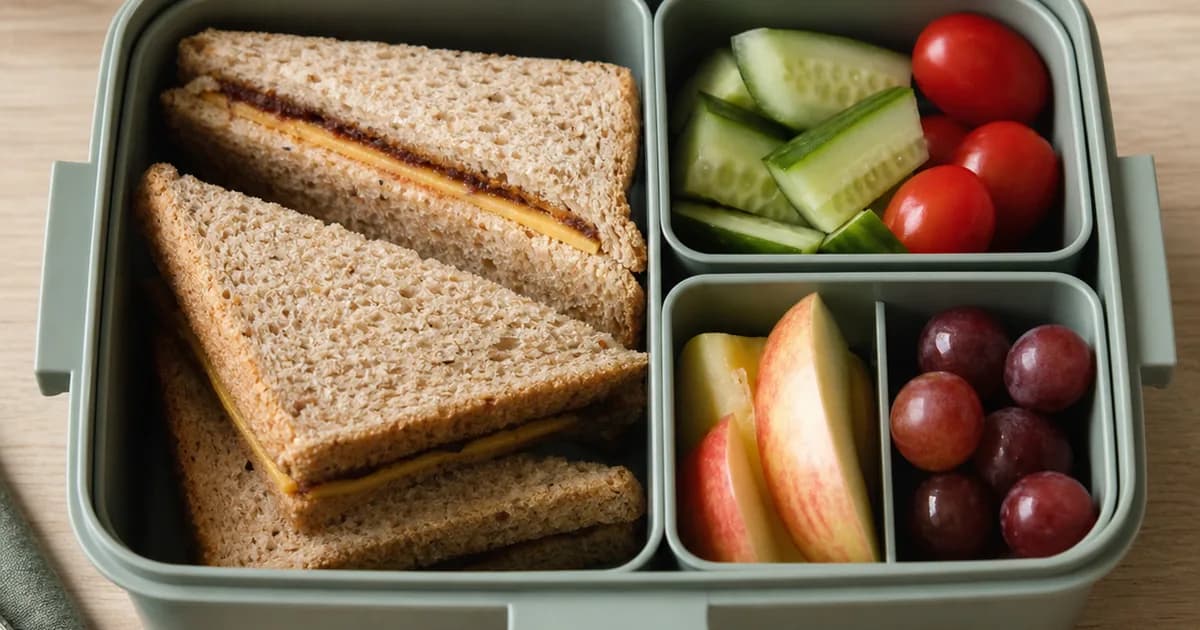
- Marmite & Cheese Sandwich
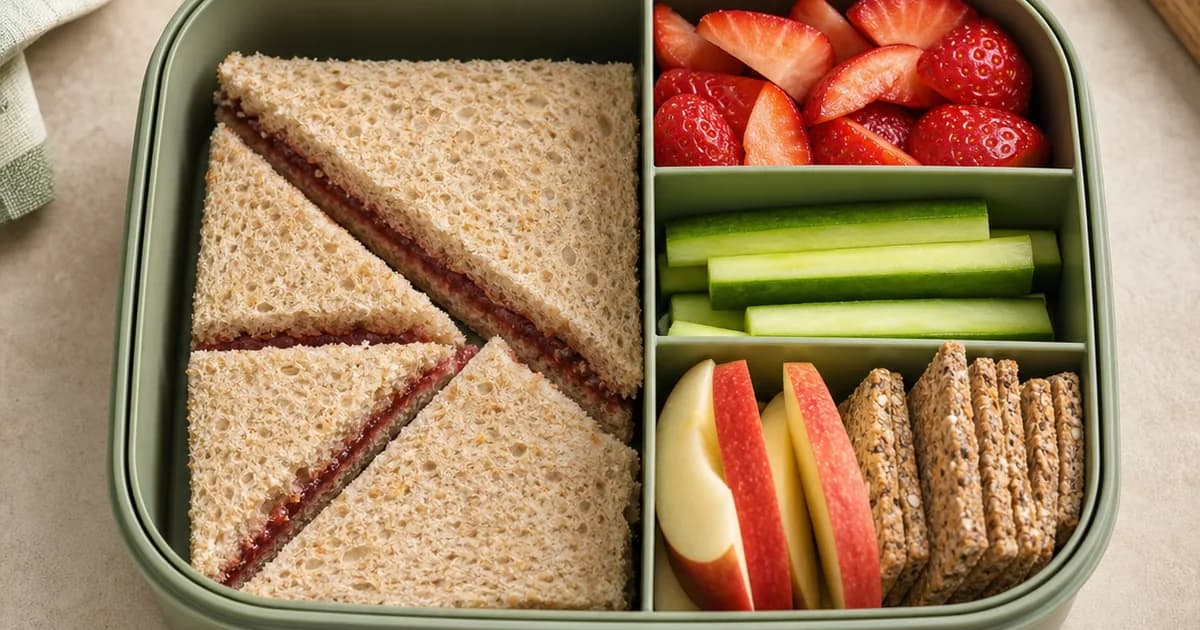
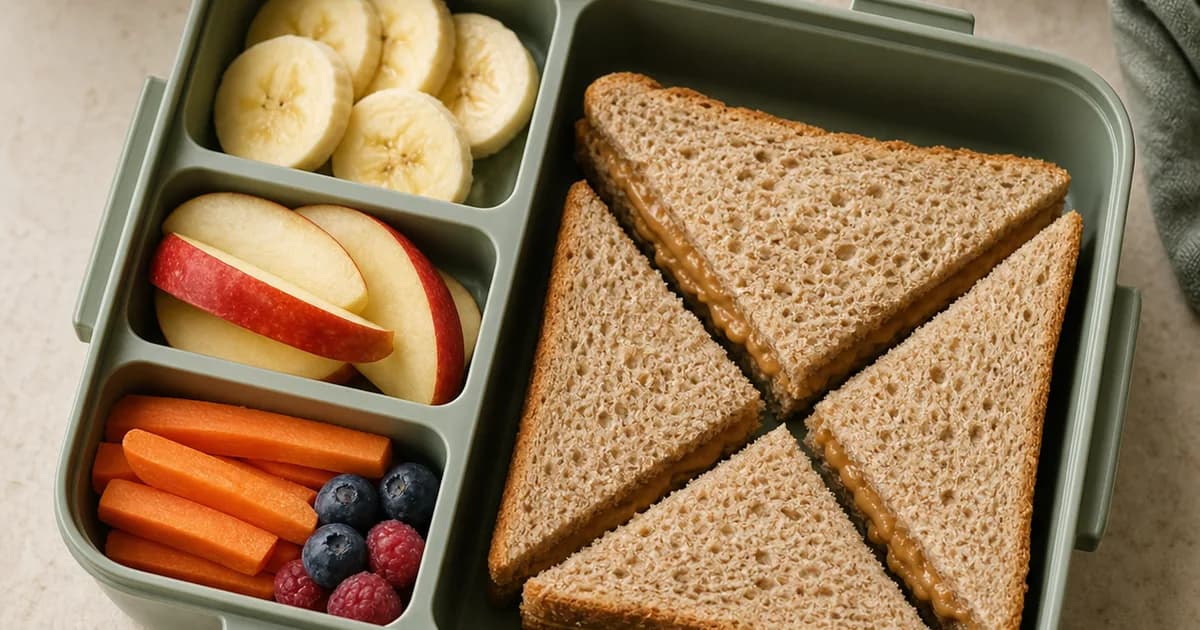
- Peanut Butter Sandwich
- Jam Sandwich
- Rice Paper Rolls
- Greek Salad
- Yoghurt & Muesli
- Chickpea Salad Sandwich
- Veggie Sticks & Hummus Box
- Egg-Free Mayo Chicken Sandwich
- Falafel Wrap
- Caprese Salad
- Fruit Salad
- Apple & Cheese Box
- Salami & Cheese Sub
- DIY Snack Box
- Cheese & Pickle Sandwich
- Falafel Pita Pocket
- Cheese & Cucumber Sandwich
- Ham Salad Sandwich
- Corn Tortilla Veggie Wrap
Filters stack, and the table below is how you tell in advance whether adding a second one empties the week:
| Of the 28 no-cook menus | How many |
|---|---|
| Also nut-free | 27 |
| Also egg-free | 25 |
| Also vegetarian | 17 |
| Also dairy-free | 10 |
| Also gluten-free | 6 |
Two things are worth reading off that list before anything else. The first is how much of it is bread — sandwiches, wraps, rolls, bagels, pita. Assembly without heat is what bread is for, and a stove-free week that refuses bread is a much shorter list than this one. The second is the thing the filter's name quietly does not say, which is the whole of the next section.
No Cooking Is Not No Chilling
Here is the number that matters most in this article, and it cuts against the filter's own name:
19 of the 28 no-cook menus list meat, fish, mayonnaise, cheese or yoghurt among their ingredients.
Those are the same foods our Term 1 heat guide puts in its highest-risk group. Not cooking them changes nothing about how they behave in a school bag between 7:30am and lunchtime. The temperature rules and the two-hour clause live in that article, sourced there — this one deliberately does not restate them, because a number restated from memory is exactly how two pages on one site end up disagreeing.
There is a second thing that changes when the stove drops out, and it is easier to miss. Healthify He Puna Waiora — the New Zealand health information service run by the Health Navigator Charitable Trust — lists among the common causes of foodborne illness both "storing food for too long and at the wrong temperature" and "cross-contaminating ready-to-eat foods with raw foods". A no-cook lunchbox is made entirely of ready-to-eat food. There is no later heating step to fall back on, so whatever is picked up at the bench travels the whole way to the classroom.
Healthify's bench advice follows straight from that, and it is the part of a no-cook morning that actually needs care rather than time:
- "Use different chopping boards for raw meat, seafood, and ready-to-eat foods such as salads and cheese. If you only have 1 chopping board wash it in hot, soapy water, and dry it well before using it for other food."
- "Wash and dry fresh fruit and vegetables and remove any damaged parts before eating them."
- "Wash your hands with soap and clean water."
- On anything you are unsure about: "When in doubt, throw it out."
The 9 menus that carry none of the meat, fish, mayonnaise, cheese or yoghurt ingredients above:
- Veggie Wrap
- Peanut Butter Sandwich
- Jam Sandwich
- Chickpea Salad Sandwich
- Veggie Sticks & Hummus Box
- Falafel Wrap
- Fruit Salad
- Falafel Pita Pocket
- Corn Tortilla Veggie Wrap
Read that list for what it is: a statement about ingredient lists, not a food-safety clearance. Hummus and falafel still want a cold bag, and a fruit box in a 30°C classroom can be a quality problem long before it is a safety one. What the list does tell you is that the shortest route to a lunch that tolerates a warm afternoon runs through the same part of the library as the shortest route to a lunch that tolerates a missing stove — legumes, spreads, bread and fruit rather than deli meat and dairy.
Where the Work Actually Goes
No-cook does not mean no work. It means the work changes shape.
Nothing here needs heat, so nothing here needs watching. What is left is buying, washing, slicing and assembling — tasks that can be interrupted halfway and picked up again, which is a genuinely different tolerance from a pot that has to come off the element at the right moment. That, rather than a number of minutes, is the honest description of what the filter buys you.
Which of these can be assembled the night before is a texture question, and it varies by menu rather than by rule. A dry filling against firm bread, a box of cut vegetables and a sealed dip behave very differently overnight from a dressed salad or a wet filling sitting on soft bread. The planner does not model that, and we have not tested it dish by dish, so the only useful advice is to find out with one menu at a time rather than committing a week to it.
The Heart Foundation's other two tips apply here without any cooking attached: "Take 10 minutes to plan each week", and "Many families rotate a few go-to lunches rather than trying to come up with new ideas every day." Rotation is what makes a stove-free week survive contact with a Wednesday — the decision gets made once, on the shopping list, and the mornings stop being decisions at all.
Can a Lunchbox Be Complete Without a Stove?
The Heart Foundation asks for the same four groups every day: "Fruit and vegetables", "Grain food (wholemeal or whole grain)", "Dairy food", and "Proteins such as legumes, fish, seafood, eggs, poultry and meat". On top of that sits one proportion rule, which is the only instruction in their guidance shaped like a measurement: "Aim to fill half your lunchbox with colourful vegetables and fruit."
None of the four groups needs a stove to reach. Their own examples make the point — under fruit and vegetables they list apple, banana, canned fruit, carrot, celery or capsicum sticks, cucumber slices, grapes, kiwifruit and mandarin; under grain foods, crackers, sandwiches and wraps; under dairy, cottage cheese, cheese and yoghurt; under proteins, baked beans and tuna. A trolley can satisfy all four.
The gap a no-cook week has to watch is the vegetable half, because a sandwich is a grain-and-protein delivery system and it is easy to stop there. That is a packing habit rather than a filter setting: the planner's prep styles apply to the main only, and snacks come from a separate list that the prep filter does not touch, so the fruit and vegetable half of the box is yours to check either way.
The Heart Foundation's own closing line is the right proportion to hold all of this in: "And remember, healthy eating isn't about strict rules. What matters most is the overall pattern of eating over time."
Does Skipping the Stove Cost You?
No, and it is worth having the number rather than the assurance.
28 of our 94 menus never meet a stove. Costed against the prices behind our NZ Lunchbox Price Index, a no-cook main costs about 12% less than the rest of the menu set — median $2.10 against $2.40 for everything else.
That is close enough that the honest reading is "the same". No-cook is not the expensive convenience option, and it is not the cheap corner-cutting one either. It buys you the morning, not money.
The snack half sits outside this comparison. The prep-style filter applies to mains only, and the snack list is not a no-cook list — a boiled egg, for one, needs a pot.
What This Article Does Not Have
Saying this plainly is more useful than filling the gaps with numbers we would have to invent:
- No minutes. Nobody here has timed a no-cook morning against a cook-fresh one, so no "saves you N minutes" figure appears. The claim in this article is about the shape of the work, not its duration.
- No temperature figures. Deliberate. They belong to the Term 1 heat guide, which sources its rules, and restating them here is how a site ends up contradicting itself.
- No claim that a no-cook menu is safe in a hot bag. The prep-style tag describes how a recipe is made. It knows nothing about how it travels, what brand of mayonnaise went in, or whether the bag had an ice pack.
- No overnight-assembly test. Which of these hold up when built the night before is exactly the question a parent wants answered, and it is the one we have not run.
If any of those get measured, they get added here with the date they were taken.
Plan a No-Cook Week
The Kiwi Lunchbox Planner has the No-cook prep style built in. Tick it — on its own, or stacked with nut-free, dairy-free, egg-free or gluten-free — and the week's mains are drawn only from the 28 menus above, costed on this week's New Zealand supermarket prices. Snacks come from a separate list and are not filtered by prep style, so check those yourself.
References
- Heart Foundation New Zealand: Healthy lunchbox ideas for school and work — heartfoundation.org.nz — for the four food groups and their examples, the half-the-lunchbox proportion rule, the cook-extra-and-batch-cook time-saving tip, the ten-minute planning and rotation tips, and the closing line about strict rules.
- Healthify He Puna Waiora (Health Navigator Charitable Trust): Food safety — healthify.nz/…/food-safety — for the common causes of foodborne illness including cross-contamination of ready-to-eat foods, the chopping-board advice, the produce-washing and hand-washing advice, and "when in doubt, throw it out".
Both source pages above were opened and read on 20 August 2026. No figure in this article comes from a page we did not open, and every menu name and count on this page is generated from our own menu data rather than typed in.
References & Sources
About this article
This article was researched and written by Yong Jae Lee, a parent based in Auckland who runs Kiwi Lunchbox as a solo project. I am not a dietitian or a health professional, so nothing here is medical advice. Where an article rests on desk research rather than something I have cooked or used myself, it says so, and nutrition writing is aligned with New Zealand's healthy eating guidelines. If you spot an error or have a suggestion, please contact us.