Yong Jae Lee
Published: March 18, 2026 · Reviewed: October 2026 · 12 min read
Researched and written by Yong Jae Lee · Content follows NZ Ministry of Health guidelines
Keeping school lunches safe from bacteria — the temperature danger zone, insulated bags, ice packs, and which foods need refrigeration in NZ.
Why Food Safety Matters in School Lunchboxes
A school lunchbox sits in a bag, in a cloakroom or under a desk, for 3-5 hours before your child eats it. During warmer months in New Zealand — and "warmer" can mean anything from October to April in many regions — that lunchbox can reach temperatures where bacteria multiply rapidly.
Symptoms like stomach cramps, nausea, and diarrhoea are easy to put down to "a bug going around", but food that was not kept at a safe temperature can cause exactly the same thing.
The part that does the work is the cold source. I pack my daughter's lunch around a frozen drink bottle — it does the cooling job, it's already in the bag, and there's nothing extra to remember or wash. An insulated bag helps a cold source last; it does not replace one. That's the practical bias running through this guide: the food safety advice that survives a real school morning is the advice that doesn't add a step.
What follows is the temperature science, the two-hour rule as Food Standards Australia New Zealand actually states it, which foods go off fastest, and what gear is worth buying.
Source: The danger zone and the four-hour limit come from New Zealand Food Safety (part of MPI — Ministry for Primary Industries). The two-hour split inside that window is Food Standards Australia New Zealand's. The food groupings further down are my own.
The Easiest Safety Win Is Choosing the Right Kind of Lunch
Most food safety advice is about managing risk after you've made the food. There's a step before that: some lunches simply don't carry the risk.
Of our 94 menus, 28 are no-cook — no hob, no oven, no reheating at any point. Another 47 are make-ahead, cooked the night before and refrigerated overnight, which is the safest way to handle cooked food because it goes into the fridge fast and comes out cold. Only 19 are cook-fresh, and those are the ones where the morning timing matters: food cooked at 7am and packed warm is food that starts its day inside the danger zone.
Skipping the stove is not the same as skipping the chill, and this is where the shortcut goes wrong: most of the no-cook menus are built on ham, chicken, tuna, mayonnaise, cheese or yoghurt — perishable protein and dairy, which is exactly what the danger zone below is about. They need the ice pack as much as a cooked lunch does. The no-cook article goes through which of them carry those ingredients and which do not.
| Prep style | Menus | Food safety profile |
|---|---|---|
| No-cook | 28 | Never heated — but most carry meat, fish, mayonnaise or dairy, so still pack cold |
| Make-ahead | 47 | Low risk if chilled overnight before packing |
| Cook-fresh | 19 | Needs care — cool fully before it goes in the box |
A separate 14 menus are thermos-friendly, which flips the problem: instead of keeping food below 5°C you keep it above 60°C, and the danger zone is skipped from the other side. Both work. What doesn't work is warm food in a cold box.
If you want to sort by these yourself, the planner has prep-style and thermos filters.
The Temperature Danger Zone
The single most important concept in lunchbox food safety is the temperature danger zone: the range between 5°C and 60°C where bacteria multiply most rapidly.
Key Facts
| Temperature | What Happens |
|---|---|
| Below 5°C | Bacteria growth slows dramatically — this is where the fridge should keep food |
| 5°C - 60°C | DANGER ZONE — bacteria multiply fastest; under ideal conditions some can double in about 20 minutes |
| Above 60°C | Too hot for bacteria to multiply. This is a holding temperature, not a kill step — NZ Food Safety's instruction for reheating is 75°C |
The 2-Hour / 4-Hour Rule
New Zealand Food Safety's limit is four hours in the danger zone. Food Standards Australia New Zealand splits that window at the two-hour mark in its guidance for food businesses — the table is theirs, and applying it to a lunchbox is my judgement:
| Time in Danger Zone | Action |
|---|---|
| Less than 2 hours | Safe to eat or refrigerate |
| 2-4 hours | Safe to eat but do not refrigerate for later |
| More than 4 hours | Throw it away |
For a lunchbox packed at 7:30am and eaten at 12:30pm, that is 5 hours. If perishable food is not kept cold, it has been in the danger zone for too long.
Which Lunchbox Foods Need to Stay Cold?
Not all foods are equally risky. Moist, protein-rich foods support bacterial growth best; dry foods barely at all. The grouping below is my own, built on that principle — it is not an official NZ Food Safety list:
High Risk (Must Stay Cold)
These foods support rapid bacterial growth and must be kept below 5°C:
| Food | Risk Factor |
|---|---|
| Sliced deli meats (ham, chicken, salami) | Protein + moisture = bacterial growth |
| Dairy (yoghurt, cheese, milk) | Protein + moisture |
| Cooked rice and pasta | Bacillus cereus risk when cooled improperly |
| Egg-based items (boiled eggs, egg sandwiches) | Protein + moisture |
| Hummus and dips | Chickpea base supports bacterial growth |
| Cut fruit (melon, berries) | Exposed surface allows contamination |
| Sushi with fish | Raw or cooked fish is high risk |
Medium Risk (Should Stay Cool, Not Critical)
| Food | Notes |
|---|---|
| Cheese (hard, uncut) | Lower moisture than soft cheese; more resilient |
| Bread and wraps | Low moisture on their own — the filling decides the risk |
Low Risk (Safe at Room Temperature)
| Food | Notes |
|---|---|
| Whole, uncut fruit | Bananas, apples, mandarins, oranges |
| Dried fruit | Low moisture content |
| Plain crackers and rice cakes | Dry goods |
| Popcorn | Very low moisture |
| Sealed, shelf-stable snacks | Muesli bars (sealed), chips |
| Nut-free seed bars | If sealed |
Keeping Lunchboxes Cold: Gear Guide
Insulated Lunch Bags
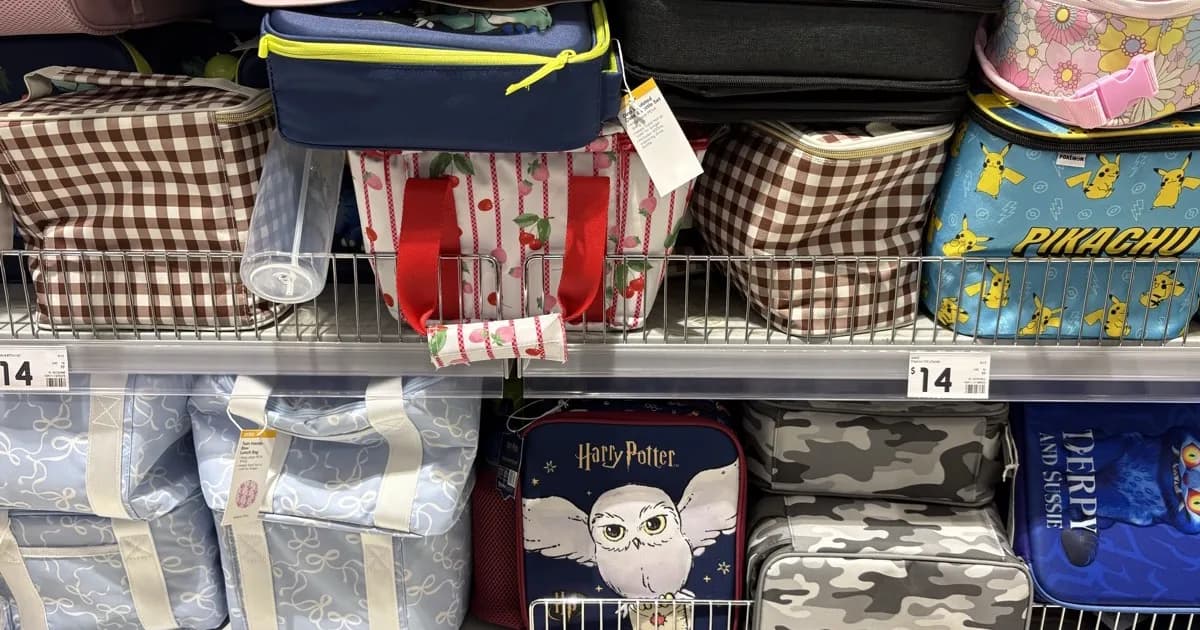
An insulated lunch bag slows down how fast the cold source warms up. It is the ice pack or frozen drink bottle inside that keeps the food cold — a bag with nothing cold in it only slows the food's drift toward room temperature. We have not measured how long any bag holds, so there are no hours here.
| Type | How it works |
|---|---|
| Freezable bag (e.g. PackIt) | The walls are frozen overnight and act as the cold source — no separate ice pack to forget |
| Foam-lined bag (e.g. Sistema, Kmart) | Needs a separate ice pack or frozen drink bottle |
| Bag made for one box (e.g. Yumbox) | Fits one lunchbox; still needs a cold source |
Prices and stock: Best Insulated Lunch Bags in NZ compares the five types you'll actually find on NZ shelves, with prices read off the shelf at Kmart Botany on 18 August 2026 — a buying guide rather than a lab test.
Ice Packs
| Type | Pros | Cons | Best For |
|---|---|---|---|
| Rigid ice packs (reusable) | Long-lasting, reusable, cheap | Takes up space | Large lunchboxes |
| Slim ice packs | Space-efficient, fits alongside food | Slightly less cooling power | Compact lunchboxes |
| Frozen water bottle | Doubles as cold drink; free | Condensation; heavy | Summer |
| Frozen juice box | Keeps food cold + becomes a drink | High sugar content | Occasional use only |
Tip: Place the ice pack on top of the food, not underneath. Cold air sinks, so a top-placed ice pack cools the entire lunchbox more effectively.
Thermos Flasks for Hot Food
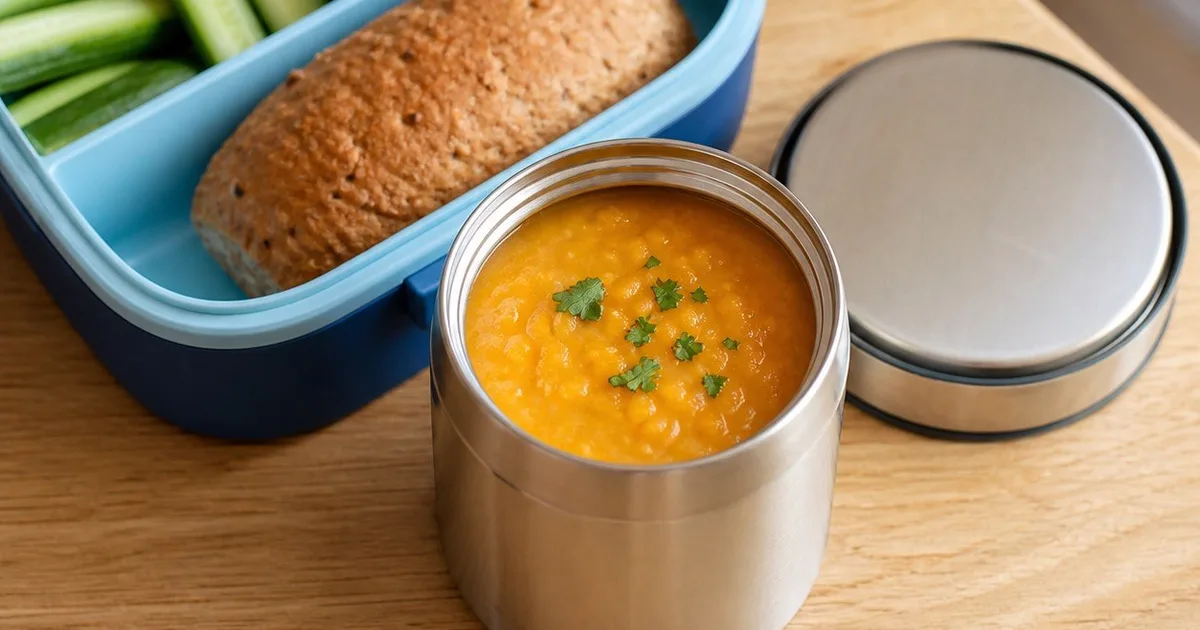
In winter, a wide-mouthed vacuum flask is how a hot lunch reaches the classroom at all. This is a great way to add variety during the colder months.
We have not tested flasks and we do not publish heat-retention figures or a brand ranking — a duration printed on packaging is a manufacturer's claim, not a measurement of ours. What to check instead:
| What to look at | Why it matters for a school lunch |
|---|---|
| Mouth width | A narrow drink flask takes thin soup and nothing else — no rice, no pasta, and no spoon |
| Vacuum-insulated stainless steel | "Insulated" also appears on foam-walled containers, which are not the same thing |
| A lid the child can open unaided | A seal tight enough to hold heat is tight enough to defeat small hands |
| Capacity matched to the portion | A part-filled flask carries a pocket of air that has to be warmed too |
| Removable seal | Moulded-in seals cannot actually be cleaned |
Hot food tip: Pre-warm the flask with freshly boiled water while you finish cooking, tip it out, then fill with piping-hot food. Our thermos lunches article sets out the whole routine.
Packing for Food Safety: Step by Step
The Night Before
- Cook and cool properly: If you are making pasta salad, rice dishes, or anything that needs to cool down, cook it in the evening and refrigerate immediately. Do not leave cooked food on the bench overnight.
- Prep and refrigerate: Cut vegetables, portion cheese, and assemble sandwiches (if using ingredients that tolerate overnight fridge storage). Store in airtight containers in the fridge.
- Freeze ice packs: Put your ice packs in the freezer the night before.
In the Morning
1. Take food directly from the fridge and pack into the lunchbox 2. Place the ice pack on top of the food 3. Close the insulated bag immediately 4. Store the packed lunchbox in the fridge if there is time before leaving (even 20 minutes helps) 5. Tell your child to keep the lunchbox in their bag (not on a sunny windowsill) until lunchtime
After School
- Check what came home: If perishable food came home uneaten and has been out of the fridge for more than 2 hours, throw it away — under the 2-hour / 4-hour rule above it cannot go back in the fridge for later
- Wash the lunchbox: Use hot, soapy water every day. Lunchbox surfaces can harbour bacteria
- Dry completely: Moisture encourages mould growth, especially in compartmentalised lunchboxes with corners and crevices
Summer vs. Winter: Adjusting Your Approach
Warm months (Term 4 and Term 1)
From about October to April, many NZ school days are warm enough that a cloakroom sits well inside the danger zone. During those terms:
- Always pack a cold source (ice pack or frozen drink bottle) — non-negotiable. An insulated bag around it helps it last
- Favour lower-risk foods — whole fruit, crackers, sealed snacks
- Avoid mayonnaise-based salads unless very well chilled
- Consider a frozen water bottle as an extra cooling element
- Pack less perishable food overall — a slightly less adventurous lunch is better than a unsafe one
Term 1 is the hardest stretch of the NZ summer for lunchboxes. NZ Lunchbox Food Safety: A Term 1 Heat Guide translates the MPI standards into packing rules, including the frozen drink bottle method.
Cool months (Term 2 and Term 3)
Food safety risks are lower from about May to September, but they do not disappear — a heated classroom is still above 5°C:
- Insulated bags are still helpful — they keep cold food cold AND hot food warm
- Thermos lunches are ideal — hot soup, pasta, or rice goes in piping hot and skips the danger zone from the hot side
- Be cautious on mild winter days — NZ winters can have surprisingly warm days, especially in the upper North Island
Common Food Safety Mistakes Parents Make
1. Packing Warm Food
Putting freshly cooked food (hot pasta, warm rice) directly into a lunchbox creates a warm, moist environment that bacteria love. Always cool food to fridge temperature before packing — or use a thermos designed for hot food.
2. Reusing Uneaten Perishable Food
If your child brings home half a sandwich with chicken and mayo that has been in a 25°C cloakroom for 5 hours, it is not safe to eat. Toss it.
3. Not Washing the Lunchbox Daily
A lunchbox that smells fine can still harbour bacteria. Wash with hot, soapy water every single day. Weekly, do a deep clean with a baking soda paste or diluted white vinegar.
4. Relying on a Lunchbox Without Insulation
A regular plastic lunchbox in a school bag provides zero temperature control. Without a cold source, the food inside drifts toward the temperature of the room around it.
5. Forgetting to Freeze the Ice Pack
An ice pack at room temperature does nothing. Freeze it overnight — every night.
Food Safety for Specific Items
Rice and Pasta
Cooked rice is one of the highest-risk lunchbox foods due to Bacillus cereus, a bacterium that produces toxins when cooked rice is left at room temperature. The rules:
- Cool cooked rice within 1 hour of cooking
- Refrigerate immediately in a shallow container
- Use within 24 hours
- Keep cold in the lunchbox with an ice pack
- The same applies to cooked pasta
Eggs
Hard-boiled eggs are a nutritious lunchbox staple, but they need proper handling:
- Cool immediately after boiling (run under cold water)
- Refrigerate with the shell on
- Peel in the morning, not the night before (the shell protects against bacteria)
- Keep cold with an ice pack
Sandwiches with Meat or Dairy
- Assemble in the morning using cold ingredients straight from the fridge
- Keep on an ice pack
- Avoid leaving sandwiches with ham, chicken, or cheese at room temperature for more than 2 hours
Quick Reference: The Lunchbox Safety Checklist
- Ice packs frozen overnight
- Cold source in the bag (ice pack or frozen drink bottle)
- Perishable items packed cold, straight from fridge
- Ice pack placed on top of food
- Lunchbox kept in school bag (not in sun)
- Uneaten perishable food discarded after school
- Lunchbox washed with hot soapy water daily
Packing for a Child Under 5
Keeping food cold is not the only thing that changes for younger children: under-5s are also more likely to choke. If you are packing for kindy, the Ministry of Health's choking guidance for early learning services lists foods to leave out and says how to cut up others — summarised in Kindy Lunchboxes in NZ: The Choking Guidance in Plain English.
Plan Safe, Healthy Lunches
The planner does not tell you which menus need to stay cold — only a handful of its recipe methods mention the fridge or an ice pack, and it has no temperature or season data. Use the high-risk table above for that. What it can do is filter by prep style or to thermos-friendly menus.
References & Sources
About this article
This article was researched and written by Yong Jae Lee, a parent based in Auckland who runs Kiwi Lunchbox as a solo project. I am not a dietitian or a health professional, so nothing here is medical advice. Where an article rests on desk research rather than something I have cooked or used myself, it says so, and nutrition writing is aligned with New Zealand's healthy eating guidelines. If you spot an error or have a suggestion, please contact us.